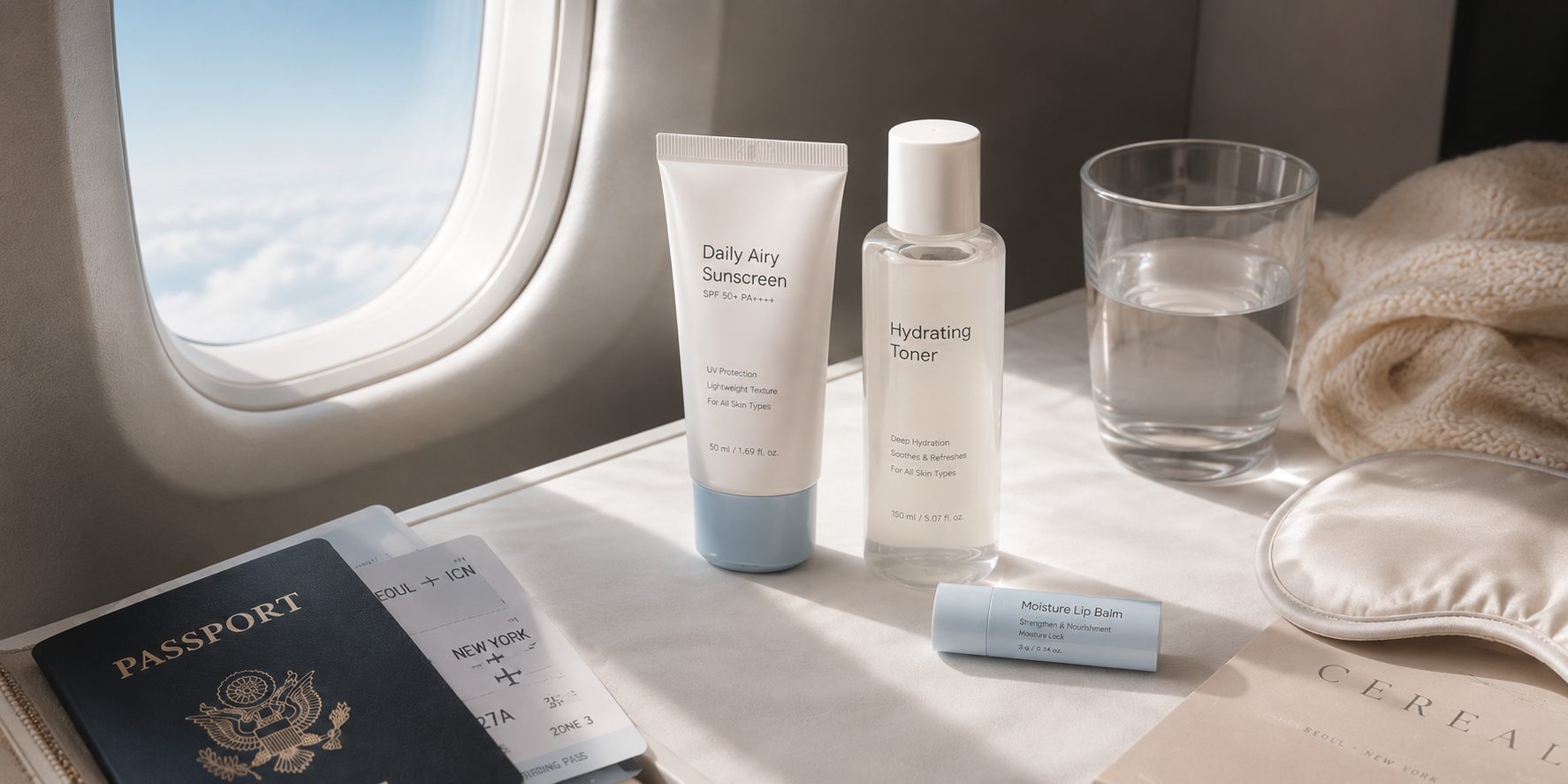
One of the most practical post-treatment questions is also one of the least discussed online: how soon after a skin treatment you can board a flight. The answer depends on the treatment, not the flight. Cabin pressure is not the issue for skin procedures. Dryness, sun and your skin’s healing phase are. Here is how to plan, treatment by treatment.
Typical timing by treatment
The table below reflects typical guidance for most patients. Your doctor confirms your individual plan at the clinic, and that instruction takes precedence over any general table, including this one.
| Treatment type | Typical wait before flying |
|---|---|
| Laser toning, pico spot treatments | Same day to next day |
| Ultrasound lifting (Shurink, Ultherapy) | Same day |
| Radiofrequency tightening (Thermage FLX) | Same day |
| Microneedling RF (Potenza), skin boosters | 24 to 48 hours is a comfortable margin |
| Deeper resurfacing procedures | Several days, per your doctor’s plan |
Two patterns explain the table. Treatments that leave the skin surface intact, such as ultrasound and radiofrequency lifting, impose almost no travel constraint. Treatments that open or sensitise the surface, such as microneedling or spot removal, benefit from a short buffer so the initial healing phase happens on the ground.
Why flying matters after treatment
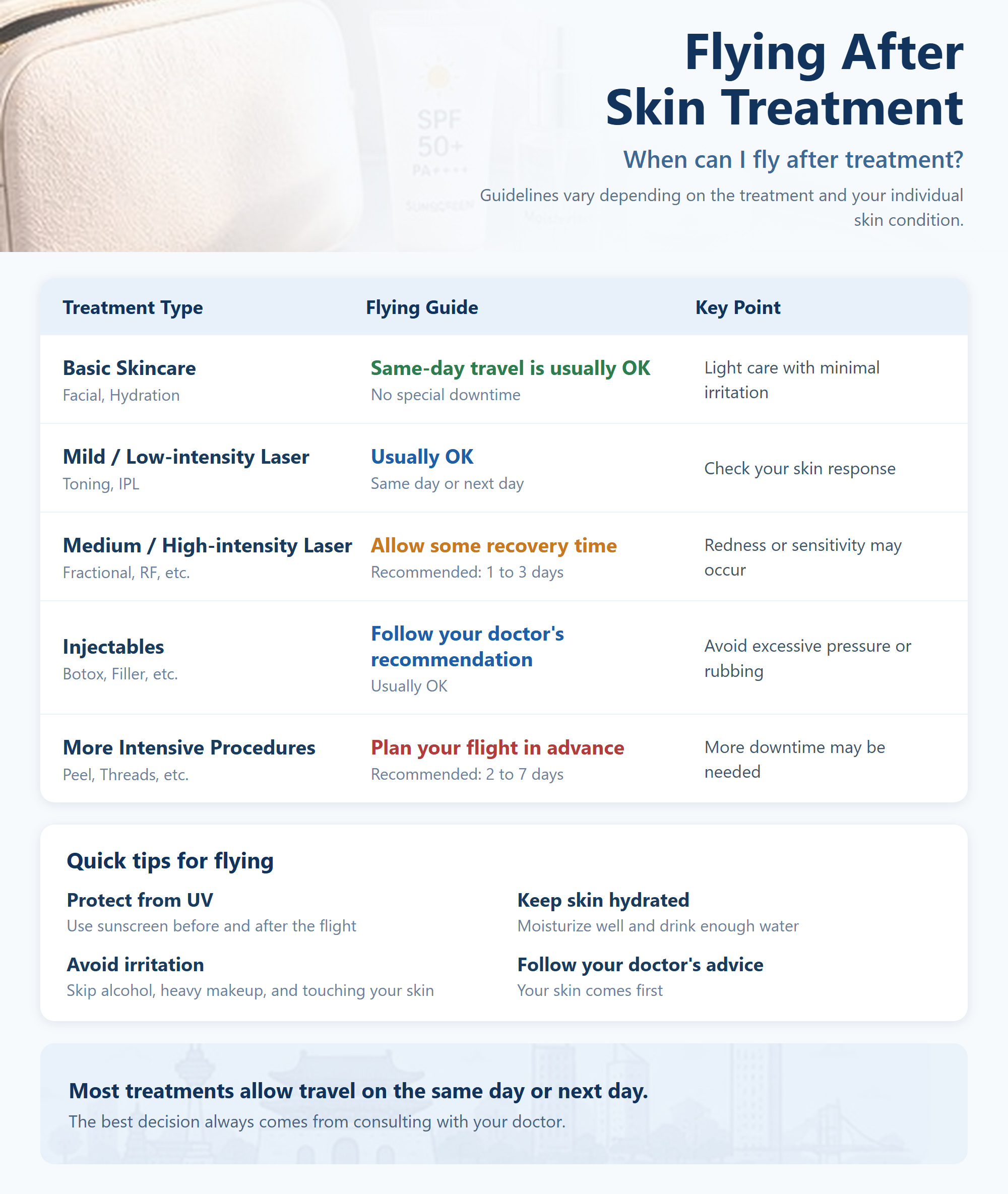
Three things about air travel are relevant to freshly treated skin.
Cabin air is dry. Humidity in flight is far lower than at ground level, and treated skin loses moisture faster than usual. The fix is simple: a bland moisturiser applied before and during a long flight.
Sun exposure continues in the air. A window seat on a daytime flight means hours of light exposure. After pigment treatments in particular, sunscreen and a closed window shade are worth the small effort.
Swelling follows gravity and time. Treatments that cause mild swelling, such as microneedling RF or injectable boosters, tend to settle noticeably after the first night’s sleep. Giving yourself that night in Seoul is usually more comfortable than spending it in seat 34A.
The first 48 hours, wherever you are
A few rules apply after most energy treatments, on the ground or in the air.
- Skip saunas, steam rooms and jjimjilbang visits, as heat can aggravate treated skin.
- Avoid alcohol and hard exercise for a day or two.
- Cleanse gently and moisturise. Skip strong actives such as retinoids and acids until the skin settles.
- Apply broad-spectrum sunscreen every morning without exception.
- Do not pick at any crusts or flaking, especially after freckle and sun spot treatments.
If you have a flight coming up and treatments you want to fit in beforehand, message us on WhatsApp with your dates and our English-speaking coordination team will help you sequence appointments sensibly.
Planning treatments around your itinerary
A simple principle covers most itineraries: put the strongest treatment earliest in the trip. Someone with five days before a long-haul flight might schedule a consultation and treatment on day one or two, leave the middle days for the initial healing phase, and keep the final day free as a buffer.
Lifting treatments are flexible and can sit almost anywhere in the schedule. Our guide to Shurink Universe, and how it differs from Ultherapy, explains how single-session and series treatments fit different schedules. For the wider planning picture, see our trip planning guide.
Frequently asked questions
Can I fly the same day as my treatment?
For laser toning, ultrasound lifting and radiofrequency tightening, same-day flights are generally fine for most patients. For treatments that break or sensitise the surface, a one-night buffer is the comfortable choice. Your doctor confirms your case at the clinic.
Does cabin pressure affect treatment results?
No. Skin treatments are not pressure-sensitive the way some surgical procedures are. The practical issues in flight are dryness and light exposure, both of which are manageable with moisturiser, sunscreen and a closed shade.
What should I pack in my carry-on?
A bland moisturiser, a broad-spectrum sunscreen and a gentle cleanser cover the essentials. Leave retinoids, acids and anything new to your routine out of the first days after treatment.
What if my skin reacts after I land?
Take a photo in natural light and message the clinic on WhatsApp. Most post-treatment questions resolve with simple guidance, and having the clinic’s answer beats guessing from forum threads.
Aftercare support once you are home
Aftercare does not end at the boarding gate. Dr. E-Laser Dermatology continues aftercare support by WhatsApp once you are home, so questions about healing, skincare timing or follow-up treatments reach the clinic team rather than a search engine at midnight.
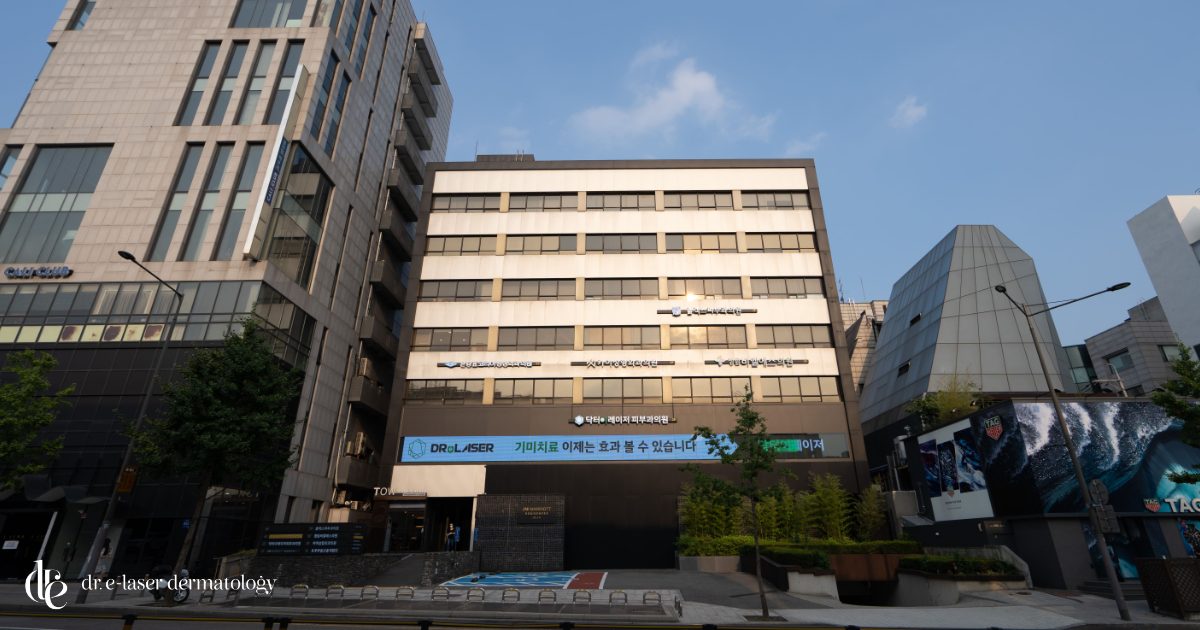
The clinic is located in Cheongdam, Seoul, a short walk from Apgujeong Rodeo Station, and English-speaking coordination is available by phone and WhatsApp from your first enquiry through to post-visit questions. If this is your first visit to a Korean clinic, our first visit guide walks through the flow.
Many treatments can be completed in a single visit. We recommend booking in advance so a time can be secured that suits your schedule. Message us on WhatsApp to plan your visit.
Arrange a Consultation
If you are fitting skin treatment around your dates in Seoul and want a sequence that works with your schedule, we are glad to help. Share your dates and a photo, and our English-speaking coordinators will arrange a private consultation. Speak with us on WhatsApp.
About the Doctor
Dr. Kwangsuk Suh is a board-certified dermatologist and the medical director of Dr. E-Laser Dermatology. He is an adjunct clinical professor of dermatology at Kyung Hee University and Sungkyunkwan University colleges of medicine, and an active member of the Korean Association of Dermatologists, the Korean Association of Clinical Dermatologists, the Korean Society of Hair Restoration Surgery, and the Korean Society for Dermatologic and Cosmetic Surgery.
This article is for general information and is not medical advice. Outcomes vary between individuals, and a diagnosis and treatment plan are confirmed during an in-person consultation.
Medically reviewed by Dr. Kwangsuk Suh, board-certified dermatologist.