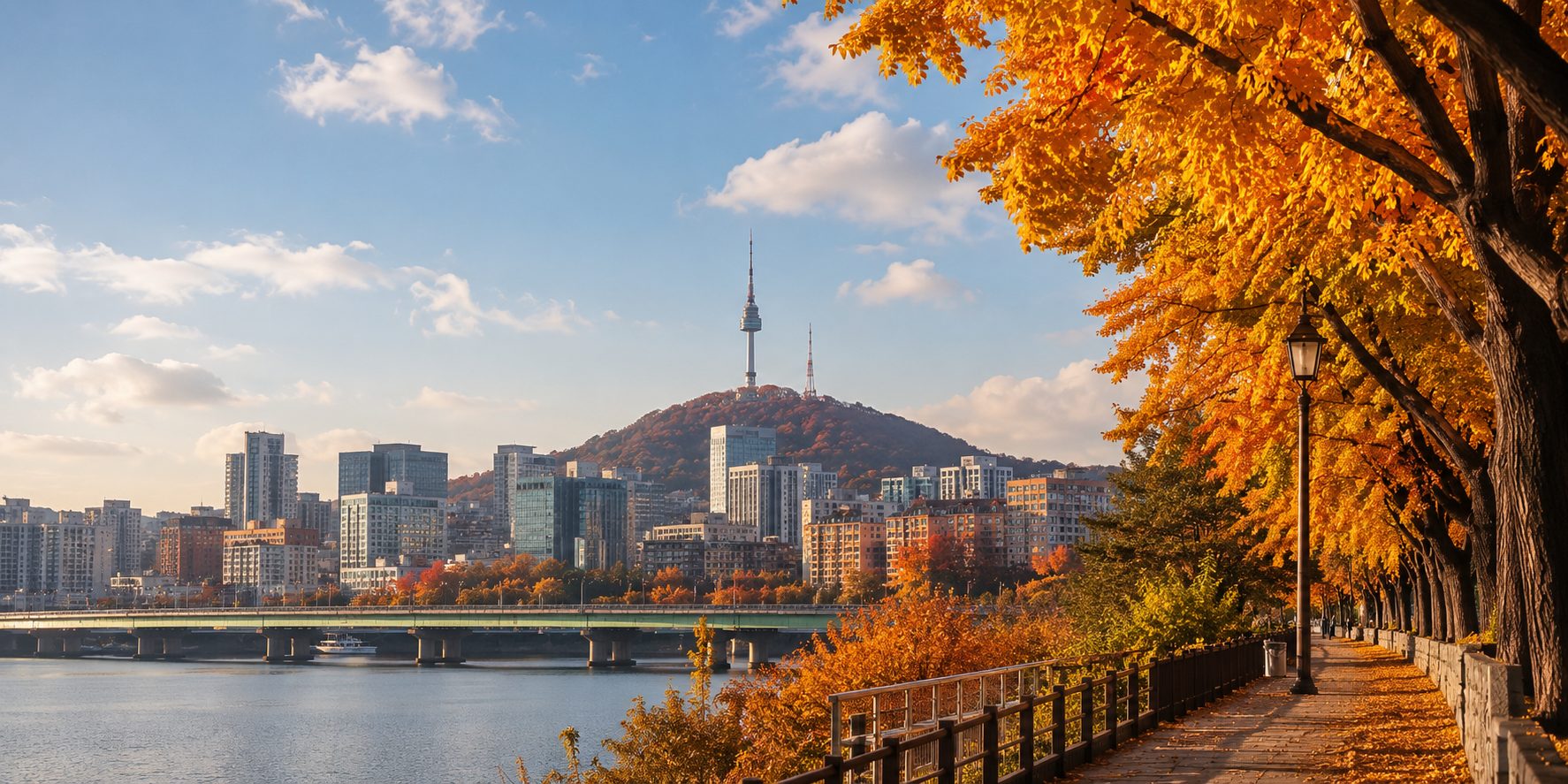
Autumn and winter, for most treatments. Korea’s seasons are pronounced, and two of them work against freshly treated skin: a humid monsoon summer with high ultraviolet levels, and a dry, cold winter that suits lasers but tests the skin barrier. The practical answer for most people is October through March, with pigment work best placed in the cooler months and lifting treatments workable year-round. Here is the reasoning, season by season.
Why season matters more in Korea than you might expect
Korea has four distinct seasons, and the extremes are real. Seoul summers combine high humidity with strong sun. Winters are cold and dry, with indoor heating pulling further moisture from the skin.
Two variables in that picture affect treatment outcomes.
Ultraviolet exposure. After pigment treatments, sun exposure is the main cause of uneven results and returning spots. Lower UV months give treated skin an easier recovery.
Barrier condition. Skin that is already dry or already inflamed from heat responds differently to energy treatments. A stable barrier at the time of treatment makes aftercare simpler.
Note that Seoul’s calendar only describes the sun you meet here. If you spend the following weeks in a sunnier climate, your actual exposure matters more than the local season, which is worth raising at consultation.
Season by season
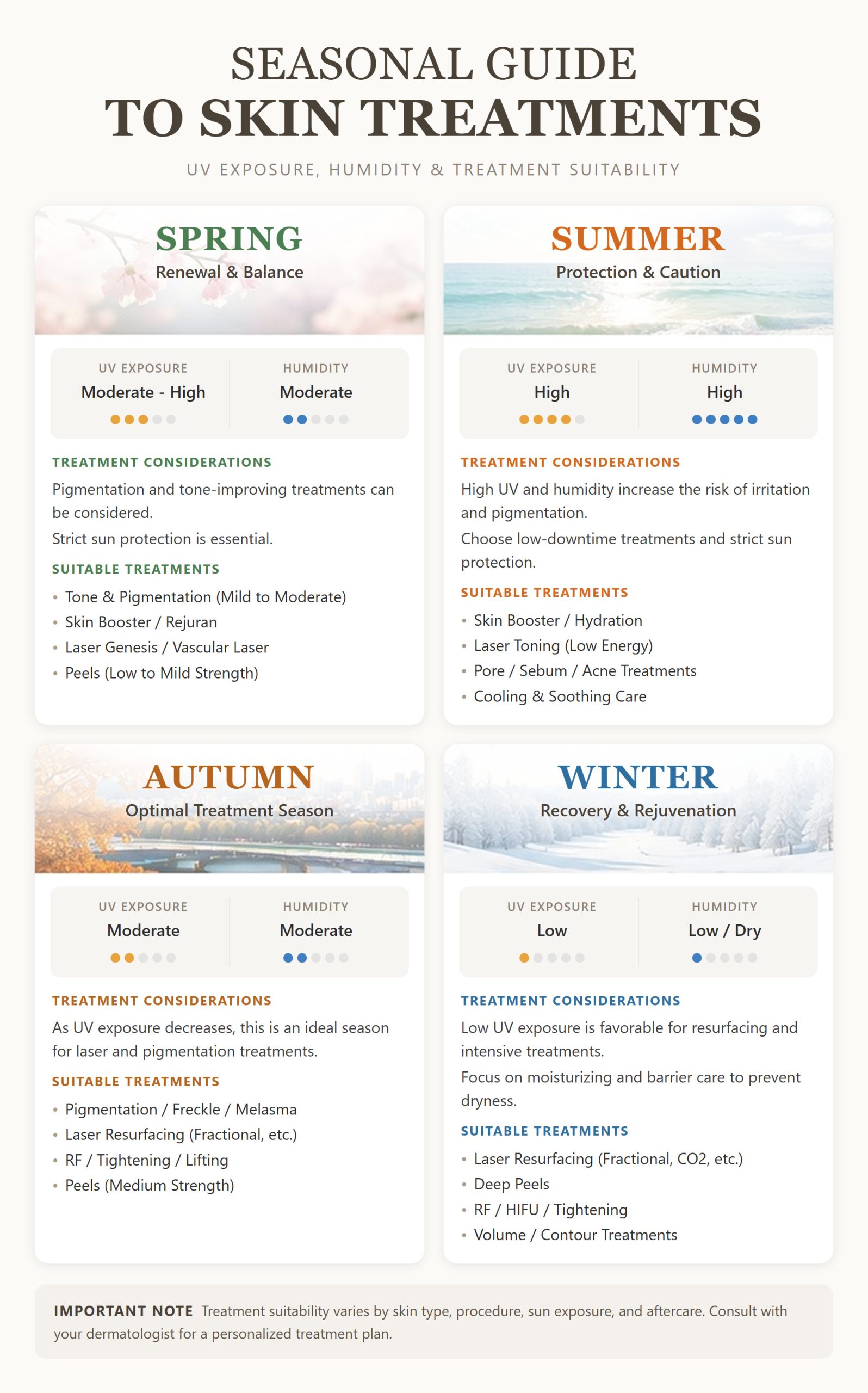
Autumn, September to November. The most comfortable window overall. UV levels are falling, humidity has dropped, and the weather is mild enough that sunscreen and gentle aftercare are easy to maintain. This is also peak travel season for autumn foliage, so clinics and flights book up earlier than usual.
Winter, December to February. The strongest season for pigment and resurfacing work, because sun exposure is at its lowest. The trade-off is dryness. Cold air outdoors and heated air indoors both draw moisture out, so barrier care after treatment needs more attention than in autumn. Bring a richer moisturiser than you would normally use.
Spring, March to May. Workable, and popular for cherry blossom travel. UV levels climb through the season, and spring in Korea brings periods of poor air quality, which some patients with sensitive or acne-prone skin notice. Sunscreen discipline becomes non-negotiable from April onward.
Summer, June to August. The most demanding season. The monsoon period brings heavy humidity, and UV levels are at their peak. Pigment treatments are commonly postponed, since tanned skin at the time of treatment raises the risk of uneven results. Lifting and tightening treatments are less affected, because they work below the pigment level and leave the skin surface intact.
If you are choosing between dates, send us your options on WhatsApp. Our English-speaking coordination team will tell you which window suits the treatments you have in mind.
Timing by treatment type
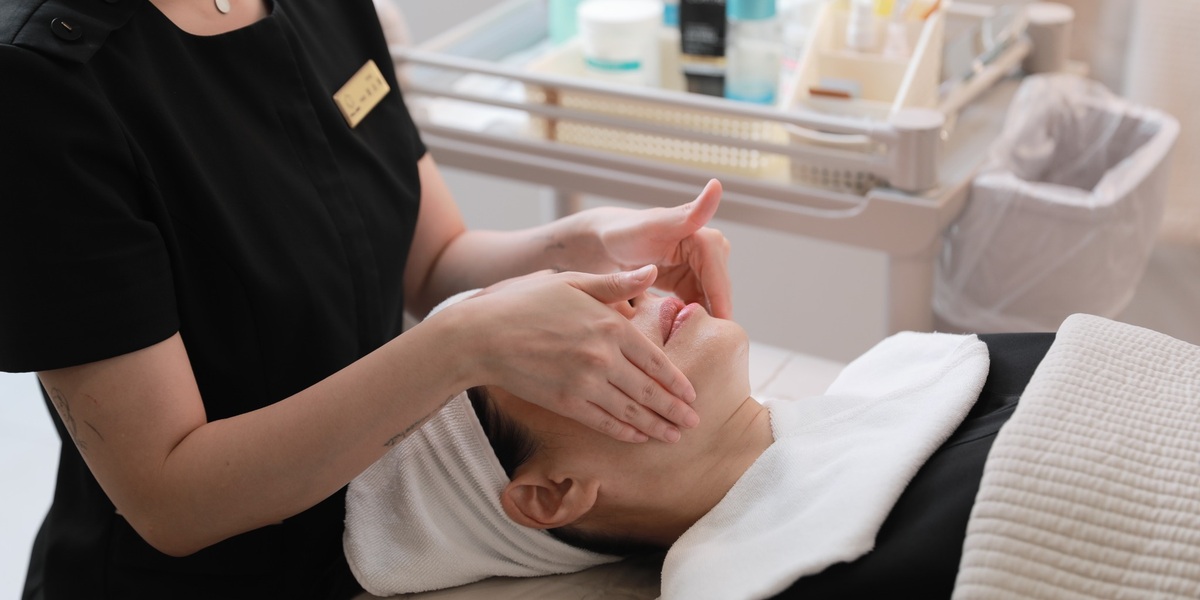
Season matters far more for some treatments than others.
| Treatment | Season sensitivity |
|---|---|
| Pigment work, including freckles and sun spots | High. Cooler months preferred, and tanned skin postponed |
| Melasma management | High. Sun exposure is a primary aggravator year-round |
| Resurfacing and microneedling RF | Moderate to high. Lower UV months are easier |
| Ultrasound and radiofrequency lifting | Low. The skin surface stays intact, so any season works |
| Injectables and boosters | Low. Season is rarely the deciding factor |
The pattern is consistent. Anything that targets pigment or opens the skin surface prefers low-UV months. Anything that works beneath the surface is largely season-neutral.
Planning around events, not just weather
One timing rule outranks the seasonal calendar. Collagen-based results build over two to three months, so a treatment booked for a wedding or milestone should sit well ahead of the date rather than close to it.
If your trip is fixed and falls in summer, the plan adapts rather than collapses: lifting and injectable work proceeds, pigment work is either adjusted or deferred to a later visit, and sun protection becomes part of the treatment plan. Our trip planning guide covers how many days each plan needs, and our guide to flying after laser treatment covers the departure end.
Frequently asked questions
Is winter really the best time for laser treatment in Korea?
For pigment and resurfacing work, yes, because sun exposure is lowest. The offset is dryness, so barrier care matters more. For lifting treatments, winter holds no particular advantage.
Can I have laser treatment in Seoul in summer?
Lifting, tightening and injectable treatments are routine in summer. Pigment work depends on your skin at the time. If you have tanned, the doctor will usually recommend waiting rather than treating, since treating tanned skin risks uneven results.
How far in advance should I book?
Autumn and spring are peak travel seasons in Korea, and appointment times fill earlier. Booking a few weeks ahead is sensible, and further ahead if your dates are fixed around an event.
Does the season change what a treatment costs?
No. Our treatment cost guide explains what actually determines pricing, and the calendar is not part of it.
Planning your visit
Season is one input among several, and it rarely decides a plan on its own. What decides it is your skin, your concerns and the days you have.
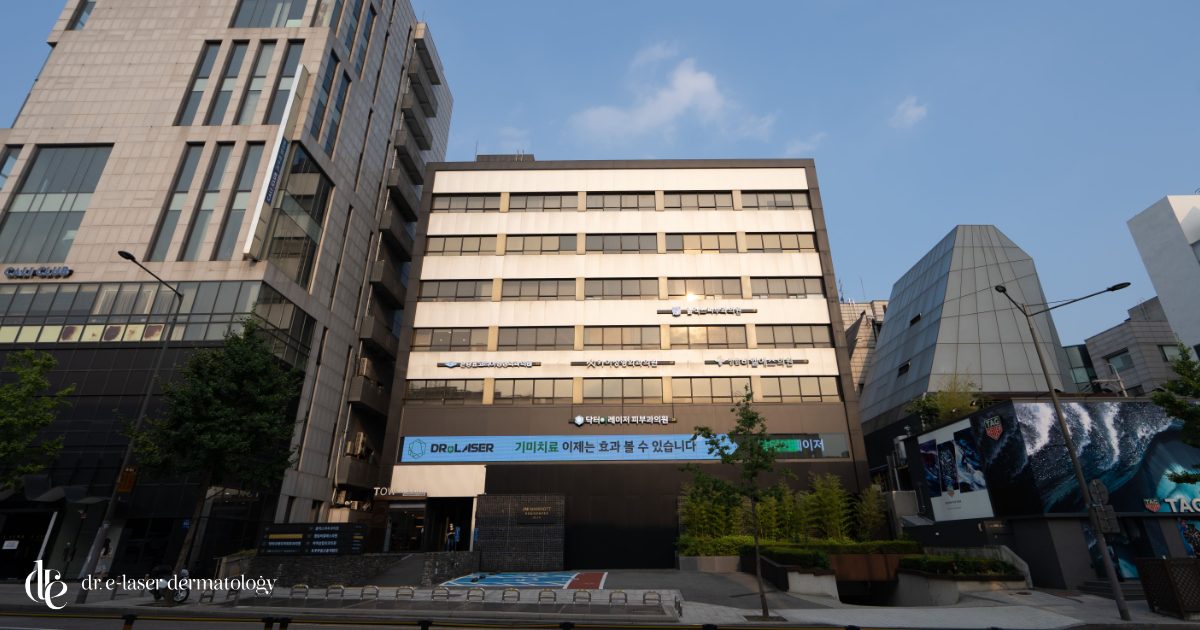
Dr. E-Laser Dermatology is located in Cheongdam, Seoul, a short walk from Apgujeong Rodeo Station, with English-speaking coordination available by phone and WhatsApp from your first enquiry through to post-visit questions.
Many treatments can be completed in a single visit. We recommend booking in advance so a time can be secured that suits your schedule. Message us on WhatsApp to plan your visit.
Arrange a Consultation
If you are fitting skin treatment around your dates in Seoul and want a sequence that works with your schedule, we are glad to help. Share your dates and a photo, and our English-speaking coordinators will arrange a private consultation. Speak with us on WhatsApp.
About the Doctor
Dr. Kwangsuk Suh is a board-certified dermatologist and the medical director of Dr. E-Laser Dermatology. He is an adjunct clinical professor of dermatology at Kyung Hee University and Sungkyunkwan University colleges of medicine, and an active member of the Korean Association of Dermatologists, the Korean Association of Clinical Dermatologists, the Korean Society of Hair Restoration Surgery, and the Korean Society for Dermatologic and Cosmetic Surgery.
This article is for general information and is not medical advice. Outcomes vary between individuals, and a diagnosis and treatment plan are confirmed during an in-person consultation.
Medically reviewed by Dr. Kwangsuk Suh, board-certified dermatologist.