
Medically reviewed by Dr. Kwangsuk Suh, board-certified dermatologist.
A double chin is the kind of concern that arrives quietly and then appears in every photograph. It is also widely misunderstood: fullness under the chin is not always fat, and it is not always about weight. That distinction shapes everything about double chin treatment in Seoul, because fat and laxity respond to entirely different technologies.
This guide explains why double chins form, how a doctor works out what yours is made of, the non-surgical options used at our clinic, and what results are realistic. It is written for international patients, and our coordinators can help with appointment questions.
Why Double Chins Form
Three things contribute, in different proportions for different people.
Submental fat. A pocket of fat beneath the chin, strongly influenced by genetics. Some people carry it even at a healthy, stable weight, which is why diet alone often disappoints here.
Skin and muscle laxity. With age, the skin and the platysma muscle that support the under-chin area gradually loosen. The jawline softens and skin begins to gather where it used to sit flat.
Structure and posture. A smaller chin, or hours spent looking down at screens, can make even modest fullness more visible in profile.
Most double chins combine at least two of these, which is why a single fixed answer so often falls short. Weight change plays a part for some people, but it is an unreliable lever: under-chin fat is often the last place weight leaves, and losing volume quickly can leave loose skin looking more pronounced than before.
Assessment Comes First
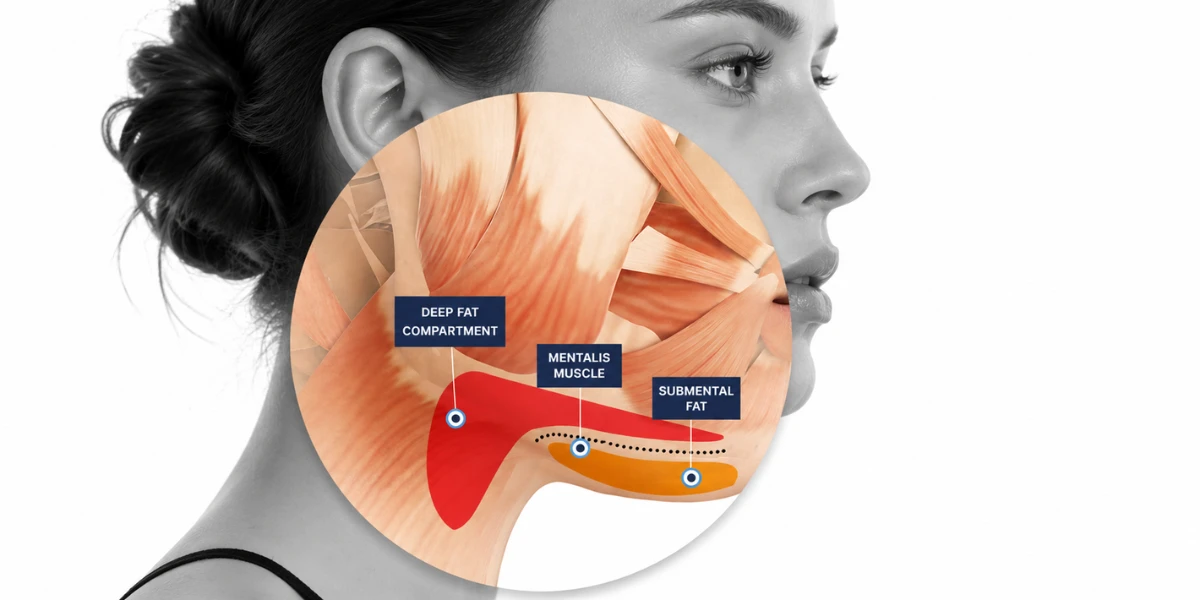
A doctor’s first job is to read the proportions. Fullness that can be gently pinched into a soft fold points to submental fat. Skin that drapes or creases without much bulk points to laxity. Many chins show both at once.
The distinction matters because treating laxity with a fat-focused approach, or the reverse, spends time and money on the wrong target. At a doctor-led clinic, double chin treatment starts with a diagnosis, not with a device.
It is also why our coordinators ask for a relaxed side-profile photo. It lets the doctor form an early impression of the balance between fat and laxity, so your consultation time in Seoul is spent confirming a plan rather than starting from nothing.
The Non-Surgical Options in Seoul
HIFU (Shurink Universe). Focused ultrasound heats the deep support layer under the chin and along the jaw, tightening it and gradually improving jawline definition. HIFU for a double chin is often the starting point when mild fullness and early laxity appear together. Our Shurink Universe guide covers it in detail.
Ultherapy. For more established laxity, Ultherapy reaches the deeper foundation layer that a surgeon would address, and suits structural softening along the jawline and upper neck.
Fat-focused approaches. When submental fat clearly dominates, tightening alone will not remove the bulk. The clinic offers fat dissolving injections (PS Injection), a doctor-administered injectable option for localised under-chin fat, and the doctor will discuss whether it suits your anatomy. The clinic’s ONDA microwave technology, used in our body contouring programmes for localised fat, may also be considered where it is clinically suitable; what fits your case is decided at consultation.
Combination plans. Face contouring without surgery often means pairing tightening with fat reduction across a short course, in an order the doctor sets.
What Results Are Realistic, and When
Energy-based treatments work gradually. Tightening builds as new collagen forms, with the visible change developing over two to three months and refining up to six. Fat reduction is also gradual, appearing over weeks rather than days.
Downtime across these options is generally light. Ultrasound-based treatments may leave mild swelling or tenderness along the jaw for a few days, and most patients return to their normal plans the same day, which is one reason the under-chin area suits a treatment trip to Seoul.
The realistic outcome is a cleaner jaw-to-neck angle and better jawline definition, a refinement rather than the dramatic change of surgery. Heavier fullness may need more sessions, or an honest conversation about limits. And because skin keeps ageing, a course of double chin treatment in Seoul is maintained with occasional follow-up rather than finished once and forever.
Curious what is behind your double chin? Share a relaxed side-profile photo and our English-speaking coordinators will help you plan. Speak with us on WhatsApp.
Double Chin Treatment at Dr. E-Laser Dermatology
Dr. E-Laser Dermatology is a laser-focused dermatology practice at 830 Seolleung-ro, 2F, Gangnam-gu, Seoul, a one-minute walk from Apgujeong Rodeo Station Exit 4. The under-chin area sits within the clinic’s wider non-surgical skin tightening work, and because ultrasound, radiofrequency, and fat-focused technologies are all available in one place, the plan follows your anatomy rather than a menu.
Our coordinators and staff support you in English, from the first message through the consultation with the doctor to aftercare. Our guide to finding an English-speaking dermatologist in Seoul explains the wider process. Enquiries can be made on WhatsApp.
Pricing and Consultation
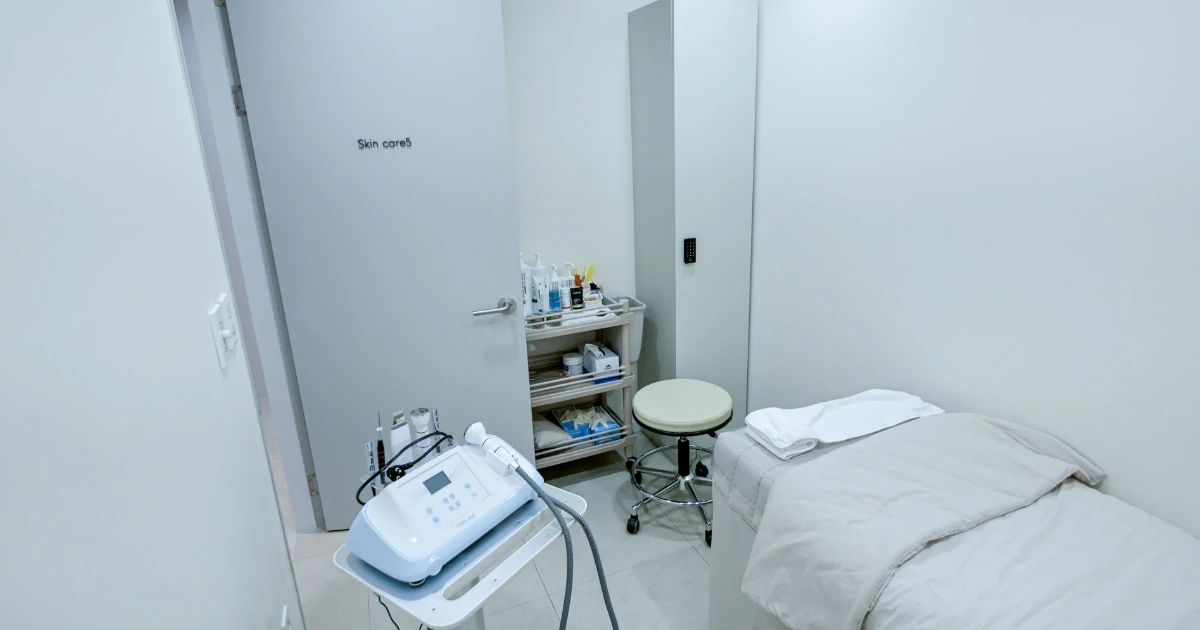
Because the plan depends on whether fat, laxity, or both are involved, and on the number of sessions, pricing is shared during your consultation rather than as a single fixed figure.
Frequently Asked Questions
Can a double chin be treated without surgery? For mild to moderate fullness, yes. Tightening devices address laxity and fat-focused approaches address the fat itself, often in combination. Advanced cases have limits, and a considered consultation will say so.
Does HIFU work on a double chin? HIFU tightens the deep support layer and improves jawline definition, so it suits cases where laxity plays a real part. Where fat clearly dominates, it is paired with, or replaced by, a fat-focused approach.
What if my double chin is mostly fat? Then jawline slimming becomes a fat question first. The doctor will assess whether a fat-reduction approach suits you and how much change is realistic before any tightening is planned.
How soon will I see a change? Gradually. Most patients notice the jaw-to-neck angle refining over two to three months as collagen rebuilds and fat reduces, with the result settling by around six.
Is support available in English? Yes. Our English-speaking coordinators support you from the first message through the consultation to aftercare, and you are welcome to message us on WhatsApp before your visit.
About the Doctor
Dr. Kwangsuk Suh is a board-certified dermatologist and the medical director of Dr. E-Laser Dermatology. He is an adjunct clinical professor of dermatology at Kyung Hee University and Sungkyunkwan University colleges of medicine, and an active member of the Korean Association of Dermatologists, the Korean Association of Clinical Dermatologists, the Korean Society of Hair Restoration Surgery, and the Korean Society for Dermatologic and Cosmetic Surgery.
Arrange a Consultation
If you would like to know what is actually shaping your chin and jawline, we are glad to help. Share a photo, ask anything, and our English-speaking coordinators will arrange a private consultation. Speak with us on WhatsApp.
This article is for general information and is not medical advice. Outcomes vary between individuals, and a diagnosis and treatment plan are confirmed during an in-person consultation. Medically reviewed by Dr. Kwangsuk Suh, board-certified dermatologist.