Medically reviewed by Dr. Kwangsuk Suh, board-certified dermatologist.
Seoul has become one of the places people travel to for their skin. The difficulty, for a visitor, is not finding a clinic; it is choosing well among a great many of them, in a language that may not be your own, without the word-of-mouth you would rely on at home.
This guide is meant to help with exactly that. It explains why patients come to Seoul for dermatology, what to look for in an English-speaking clinic, how the process works when you are travelling, and what to expect once you are in the chair. It is written for international patients.
Why Patients Come to Seoul for Their Skin
Korea has unusual depth in dermatology, particularly in lasers and non-surgical treatments. Many devices and techniques are adopted early and used at high volume here, which means a great deal of practical experience and, often, competitive pricing compared with Western clinics.
That depth is real, but it is worth being clear-eyed: a large market contains the full range, from careful, doctor-led practices to high-volume operations that move quickly. The opportunity is excellent care; the task is telling the two apart.
What to Look For in an English-Speaking Dermatologist
A few markers separate a clinic worth your trust from one to approach with caution.
Board certification you can verify. The most useful signal is a board-certified dermatologist on the medical staff and a clear answer to who performs each treatment. Look for a clinic that will tell you plainly.
Honesty about what you do and do not need. A trustworthy clinic will tell you when a treatment is not right for you, or when your expectations need adjusting. Being told “no” to something is a good sign, not a bad one.
Precision over package. Treatments planned around your skin (the right device, depth, and sequence) tend to serve you better than a fixed package applied to everyone. The best questions a clinic can answer are why this, for you.
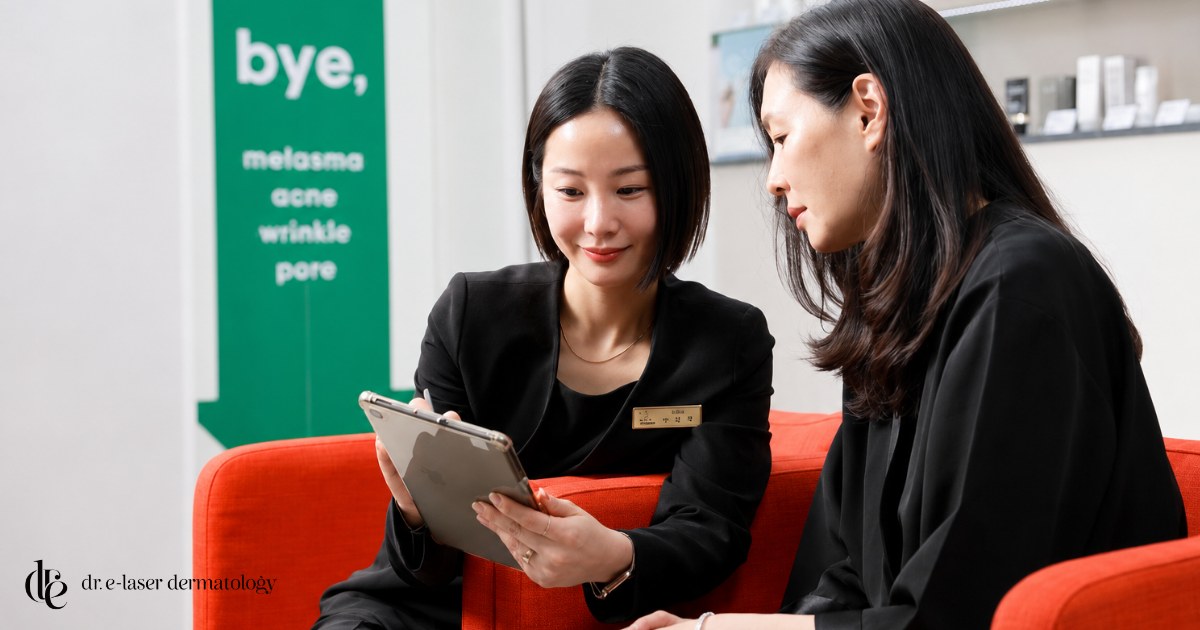
Real English support. At many Korean clinics the doctor may consult in Korean while an English-speaking coordinator guides you, helps you communicate during the consultation, and stays reachable for aftercare. That is a normal and workable model, what matters is that you can ask questions, understand the plan, and reach someone in English from the first message through to follow-up after you fly home. It is fair to ask a clinic how its language support actually works before you book.
Realistic, qualified language. Clinics bound by Korean medical advertising law avoid guarantees, “cures,” and dramatic before-and-after promises. Restraint here is a marker of seriousness, not weakness.
How the Process Works When You Are Travelling
For most international patients, the journey begins before the flight. Sharing a photo of your skin and a note about your concerns lets a clinic give you an initial sense of what is realistic and how much time to set aside. Many clinics, including ours, handle this over WhatsApp.
From there, a typical visit involves an in-person consultation and assessment, the treatment itself if it suits you and the timing works, and aftercare guidance you can follow at home. Where a treatment needs a course of several sessions, a good clinic will be honest about what can be achieved in a single trip and what is better continued later, with follow-up by message.
What Patients Most Often Come For
It helps to know your concern fits a category, and that each has its own approach. Broadly, the treatments international patients ask about most fall into these groups:
Skin lifting and tightening. For laxity and loss of firmness, the main non-surgical options are Ultherapy, which uses ultrasound to lift deeper structure, and Thermage, which uses radiofrequency to firm and refine the surface.
Pigmentation and brightening. For uneven tone, sun spots, and dullness, pico laser is the workhorse, with melasma treated as its own careful subject, since it must be approached gently.
Texture, pores, and acne scars. For surface refinement, treatments such as Juvelook and Potenza address pores and texture, while laser treatment for acne scars is matched to the specific scar type.
Skin boosters and regeneration. For overall skin quality, skin boosters such as Rejuran and Juvelook improve hydration, resilience, and firmness from within, while newer options such as the Re2O ECM booster supply the skin’s structural building blocks directly.
Redness and rosacea. For persistent redness, flushing, and visible vessels, vascular laser treatment calms the skin as part of a wider plan.
Most patients arrive with a concern rather than a treatment in mind, which is as it should be, matching the two is the doctor’s job.
What to Expect at the Consultation
A good consultation is unhurried. It starts with an assessment of your skin and a conversation about what is bothering you and what you are hoping for. From there, a doctor should explain the options, what each can realistically achieve, and what they would and would not recommend, including, sometimes, doing less than you came in expecting.
Pricing in Korea is usually shared at the consultation rather than published as fixed figures, because a sensible plan depends on what your skin actually needs. That is reasonable, provided the clinic is transparent once it has assessed you.
A Word on Realistic Expectations
The clinics worth trusting tend to under-promise. Skin treatments improve, refine, and manage; they rarely transform overnight, and the honest ones will say so. If a clinic guarantees a flawless result, promises permanence, or pressures you towards a decision, treat that as a reason to slow down. The quieter, more qualified answer is usually the more reliable one.
English-Speaking Care at Dr. E-Laser Dermatology
Dr. E-Laser Dermatology is a laser-focused dermatology practice in Cheongdam, Seoul, and it is built around the principles above: a board-certified dermatologist on the medical staff, treatment planned around your skin rather than a fixed package, and honest guidance about what will and will not help.
Our coordinators and staff support you in English, from the first message, through the consultation with the doctor, to aftercare. Consultations are private and unhurried, and you are welcome to share a photo and ask questions in English on WhatsApp, so your time in Seoul is spent well.
Planning skin treatment during a visit to Seoul? Share a photo and tell us your concern, and we will talk you through what is realistic. Speak with us on WhatsApp.
Pricing and Consultation
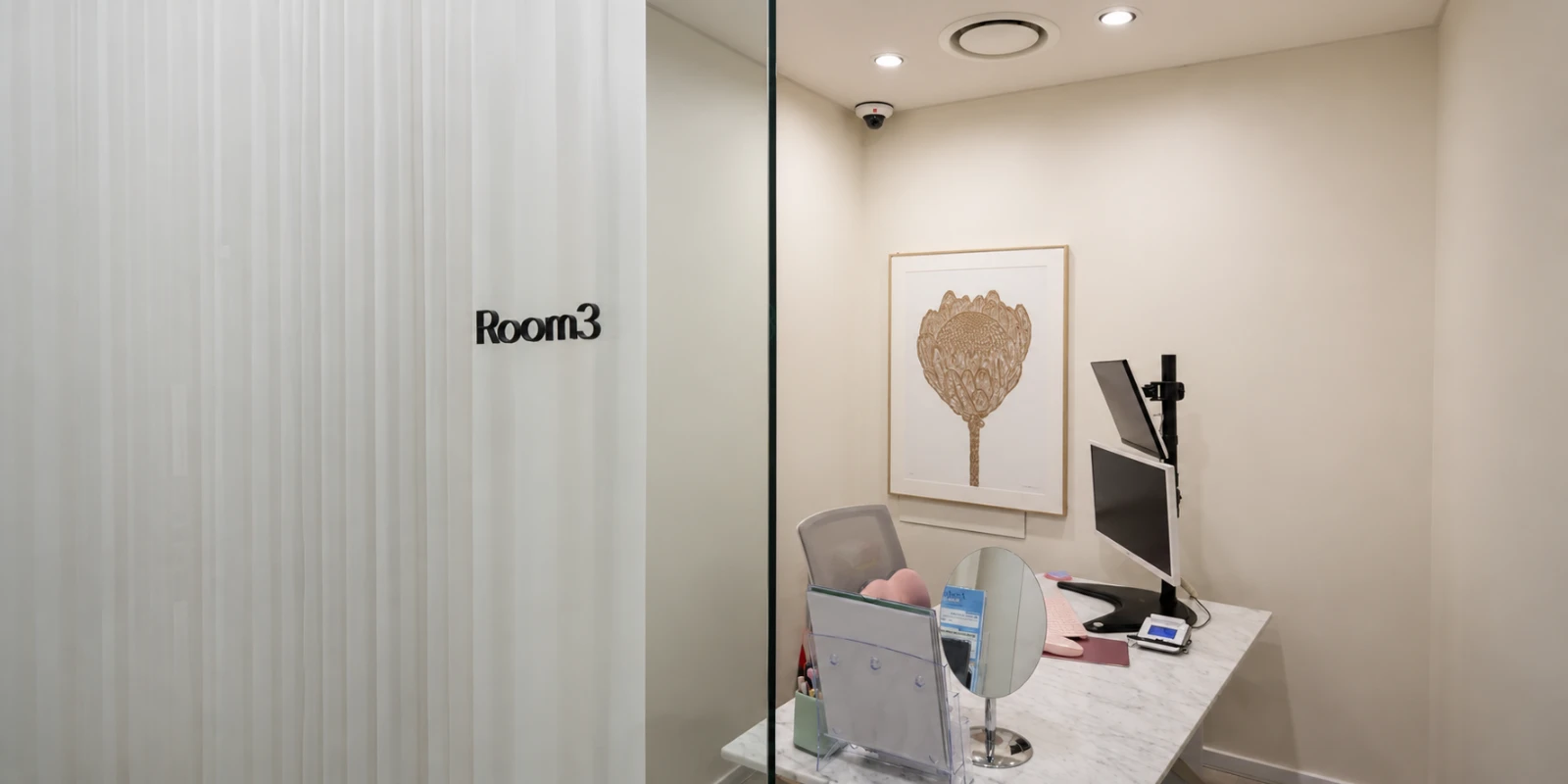
Because a treatment plan depends on your skin and your goals, pricing is shared during your consultation rather than as a single fixed figure. This keeps the plan specific to you, and lets a doctor recommend what your skin actually needs.
Frequently Asked Questions
Hours, location, booking and aftercare are answered in one place on our clinic FAQ page.
Do I need to speak Korean to see a dermatologist in Seoul?
Not at a clinic set up for international patients. What matters is genuine English support, an English-speaking coordinator who handles your enquiry, supports you through the consultation with the doctor, and manages your aftercare in English. At our clinic, you can begin in English on WhatsApp before you even arrive.
How do I know a clinic is trustworthy?
The strongest signals are a board-certified doctor leading the consultation, honesty about what you do and do not need, treatment planned around your skin rather than a fixed package, and realistic, qualified language rather than guarantees.
How far in advance should I plan?
Sharing a photo and your concerns before you travel helps a clinic tell you what is realistic and how much time to allow. Some treatments are a single session; others are a course, in which case part may be done in Seoul and continued at home.
Is treatment in Seoul safe for foreigners?
Care at a qualified, doctor-led clinic is held to professional standards, and Korean medical advertising rules discourage the over-promising you should be wary of anywhere. As always, the safeguard is choosing a clinic that diagnoses properly and sets honest expectations.
How is pricing handled?
Most clinics share pricing at the consultation, once a doctor has assessed your skin and the plan is clear, rather than publishing fixed figures. Transparency after assessment is what to look for.
Can I arrange everything before I arrive?
Largely, yes. An initial conversation, a photo review, and a sense of the plan can usually happen by message in advance, so your visit is focused and efficient.
Which area of Seoul is known for dermatology clinics?
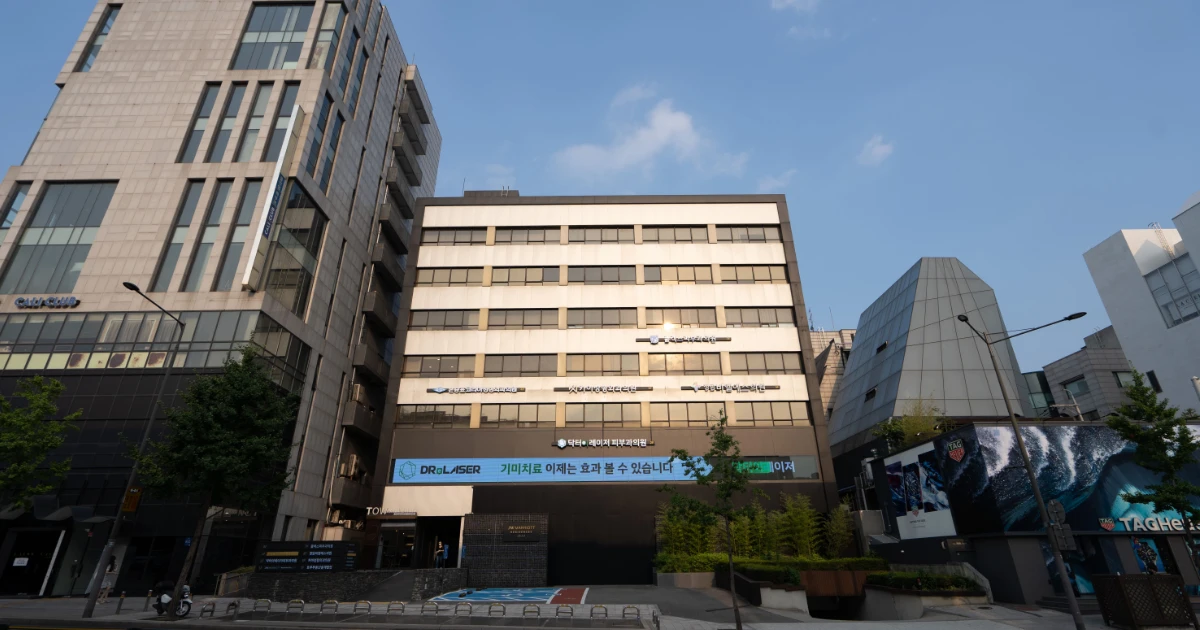
Gangnam has the highest concentration of dermatology clinics in Seoul, particularly around Apgujeong Rodeo and Cheongdam. The area is easy to reach by subway, and many clinics accustomed to international patients, including Dr. E-Laser Dermatology, are within a short walk of Apgujeong Rodeo Station.
About the Doctor
Dr. Kwangsuk Suh is a board-certified dermatologist and the medical director of Dr. E-Laser Dermatology. He is an adjunct clinical professor of dermatology at Kyung Hee University and Sungkyunkwan University colleges of medicine, and an active member of the Korean Association of Dermatologists, the Korean Association of Clinical Dermatologists, the Korean Society of Hair Restoration Surgery, and the Korean Society for Dermatologic and Cosmetic Surgery.
Arrange a Consultation
If you are considering skin treatment in Seoul and would like to begin in English, we are glad to help. Share a photo, tell us your concern, and arrange a private consultation. Speak with us on WhatsApp.
This article is for general information and is not medical advice. Outcomes vary between individuals, and a diagnosis and treatment plan are confirmed during an in-person consultation.
Medically reviewed by Dr. Kwangsuk Suh, board-certified dermatologist.
To see how this is done at our clinic, read more about visit the clinic.