
For some patients, yes, clearly. For others, no, and a good clinic will tell you which one you are. Travelling to Seoul for dermatology makes sense when the treatments you want benefit from Korea’s device range and clinical experience, when your plan involves more than a single quick procedure, and when your schedule allows the days a treatment actually needs. It makes less sense for one small treatment you can get at home, or for procedures whose aftercare demands weeks of in-person follow-up. This guide lays out both sides so you can decide with clear eyes.
What Korea actually offers
Strip away the marketing and a few structural facts remain.
Device depth. Korean dermatology clinics work with an unusually wide range of energy devices and injectables. At Dr. E-Laser Dermatology alone, the lineup spans ultrasound lifting, radiofrequency tightening, pico lasers, microneedling RF and a full injectable programme. For patients whose concern needs a specific technology, that range matters.
Procedure volume. Aesthetic dermatology is an everyday medical service in Korea, not an occasional one. High volumes mean doctors see your concern often, across many skin types and ages.
Efficiency of a single trip. Consultation, treatment and initial follow-up can be arranged within one stay, and several concerns can be addressed in a planned sequence. Our guide to combining treatments in one visit covers how this is structured.
Cost. For many treatments, patients find Seoul pricing favourable compared with what they pay at home, though this varies by country, clinic and procedure. Our treatment cost guide explains typical ranges honestly, without teaser pricing.
When the trip is not worth it
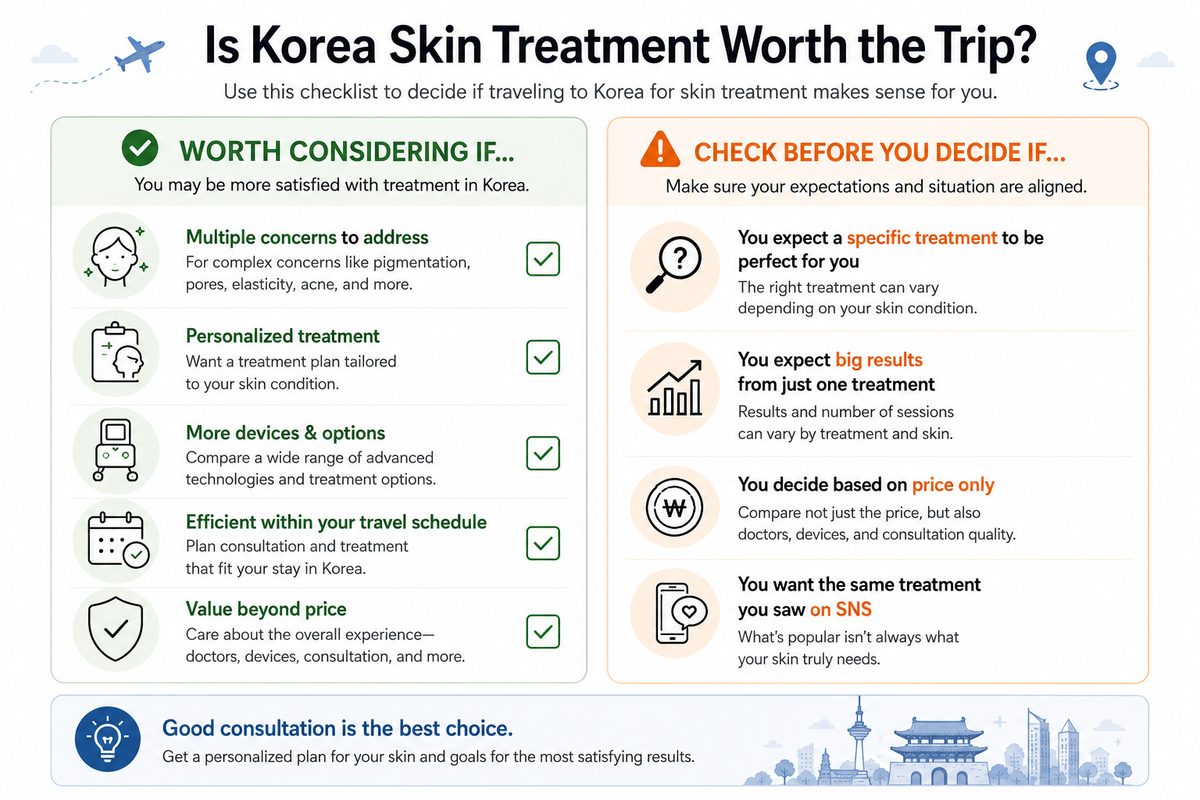
An honest answer has to include this section.
A single small treatment. Flying to Seoul for one botox appointment rarely makes sense on its own. Treatments like this are worth adding to a trip you were already taking, not the reason for the trip.
Procedures needing long in-person follow-up. A treatment plan that requires weekly visits over months is a poor fit for someone who lives twelve hours away. At consultation, the doctor will flag when your concern is better managed near home, or will structure a plan around remote follow-up only where that is medically sensible.
No room in the itinerary. Results need healing time, and some treatments should not happen the day before a long flight. If your schedule cannot absorb that, the trip will compromise the treatment. Our trip planning guide shows how many days different plans need.
Unrealistic expectations. No clinic in any country turns back twenty years in one visit. If a message promises that, it is marketing, not medicine.
If you are unsure which category your case falls into, send us your concern and travel dates on WhatsApp. Our English-speaking coordination team will tell you honestly whether a visit is worth planning.
What actually decides the outcome
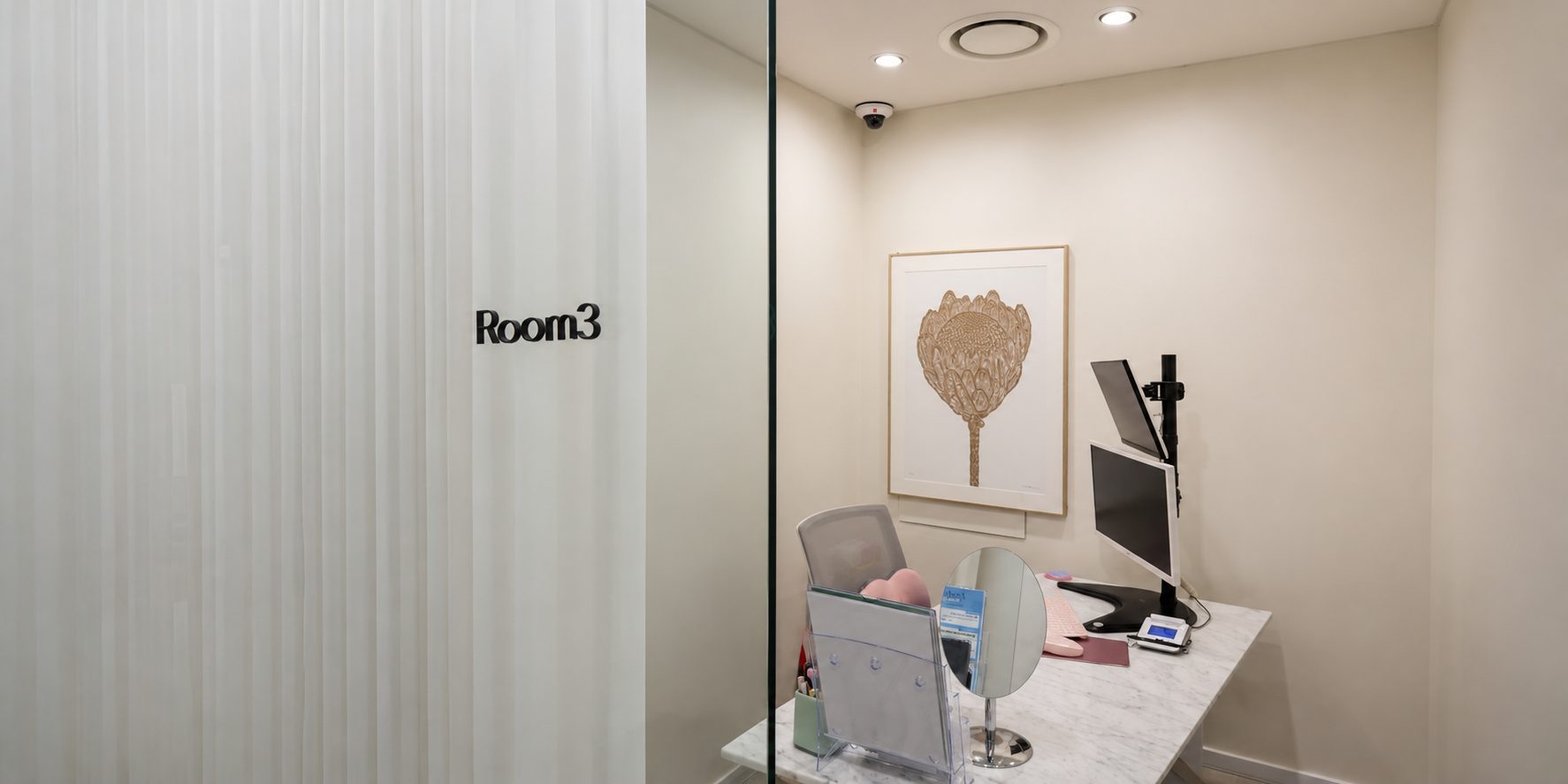
Three variables, none of them airline-related.
Diagnosis quality. The right treatment for your specific skin decides more than the country you have it in. A careful consultation before anything is booked is the single strongest predictor of a result you will be happy with.
Communication. Misunderstood aftercare undoes good work. This is why finding an English-speaking dermatologist in Seoul is not a convenience but a safety factor.
Aftercare continuity. The question to ask any Korean clinic is what happens after you fly home. At Dr. E-Laser Dermatology, follow-up continues over WhatsApp with photo reviews, so healing questions reach your doctor’s team rather than a search engine.
How to decide, in four steps
- Write down your actual concerns, in order of priority.
- Check whether the treatments for those concerns suit a visitor’s timeline. Our first visit guide and trip planning guide answer most of this.
- Send your list and dates to a clinic and ask for an honest feasibility answer before you commit to anything.
- Book the consultation first, and let the treatment plan come from the doctor, not from a package page.
Frequently asked questions
Is skin treatment in Korea worth it for a one-week trip?
Often, yes. A week comfortably fits a consultation, one or two well-chosen treatments, initial healing and a buffer day before flying. Single-session lifting treatments and quick procedures suit this window well.
Do Korean clinics treat non-Korean skin?
Yes. Clinics that regularly treat a range of skin types adjust settings and plans to yours. Ask any clinic how they assess skin type before treatment; the answer tells you what you need to know.
What should I arrange before flying?
A consultation booking, a rough treatment shortlist, and enough days after treatment for initial healing. Everything else, including the final plan, is properly decided at the clinic with the doctor.
Can everything be done in one visit?
Many plans can, some cannot. Treatments that need a series of sessions spread over months are structured differently for visitors, and the clinic will say plainly what one visit can and cannot achieve.
The honest summary
Korea rewards the patient who comes with a plan: real concerns, realistic expectations, and a schedule that gives treatments the time they need. It disappoints the patient chasing a transformation between two flights. Which trip you take is decided before you book anything, in a conversation a good clinic is glad to have.
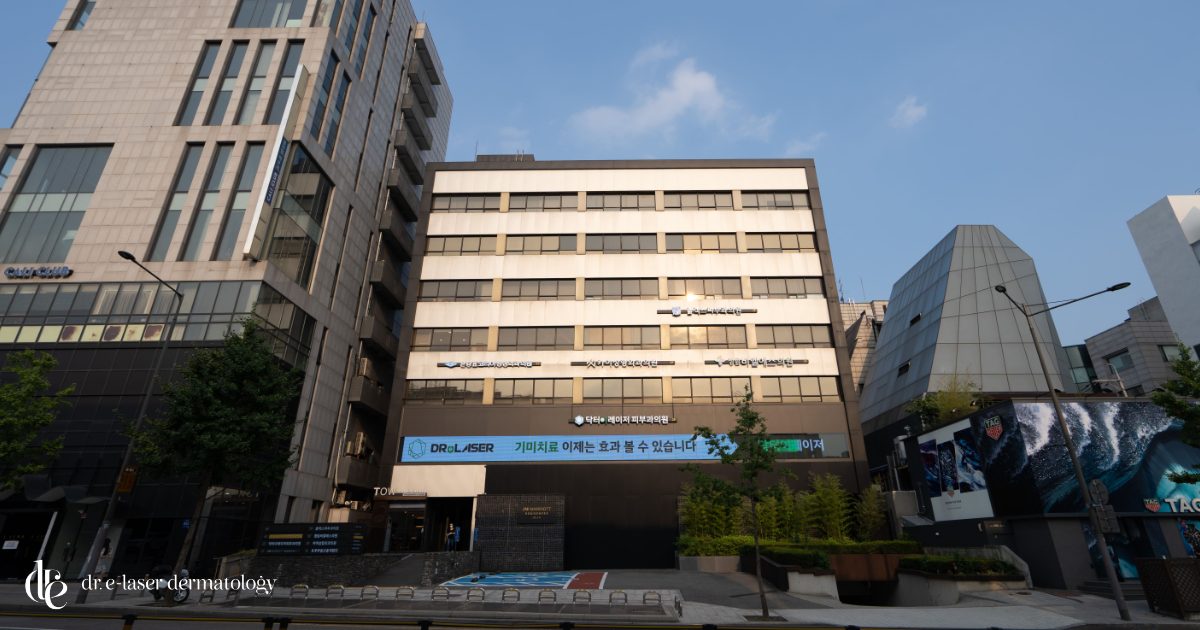
Dr. E-Laser Dermatology is located in Cheongdam, Seoul, a short walk from Apgujeong Rodeo Station, with English-speaking coordination available by phone and WhatsApp from your first enquiry through to post-visit questions.
Many treatments can be completed in a single visit. We recommend booking in advance so a time can be secured that suits your schedule. Message us on WhatsApp to plan your visit.
About the Doctor
Dr. Kwangsuk Suh is a board-certified dermatologist and the medical director of Dr. E-Laser Dermatology. He is an adjunct clinical professor of dermatology at Kyung Hee University and Sungkyunkwan University colleges of medicine, and an active member of the Korean Association of Dermatologists, the Korean Association of Clinical Dermatologists, the Korean Society of Hair Restoration Surgery, and the Korean Society for Dermatologic and Cosmetic Surgery.
This article is for general information and is not medical advice. Outcomes vary between individuals, and a diagnosis and treatment plan are confirmed during an in-person consultation.
Medically reviewed by Dr. Kwangsuk Suh, board-certified dermatologist.