
A question we hear often from Western patients: whether a Korean dermatology clinic is the right place for lighter skin. It is a fair question, and it deserves a direct answer. Yes, laser treatment for Caucasian skin is routine in Seoul when the clinic assesses skin type properly. What actually changes is not whether you can be treated, but how the doctor sets parameters and which concerns are most likely to bring you in.
The short answer
Modern laser and energy devices are global platforms, calibrated to the individual in front of the doctor rather than to a nationality. What a careful clinic does differently for lighter skin types is adjust settings, anticipate redness rather than pigmentation as the main reaction, and select treatments that match concerns common in Western skin, such as sun damage, facial redness and fine lines.
Skin types, explained
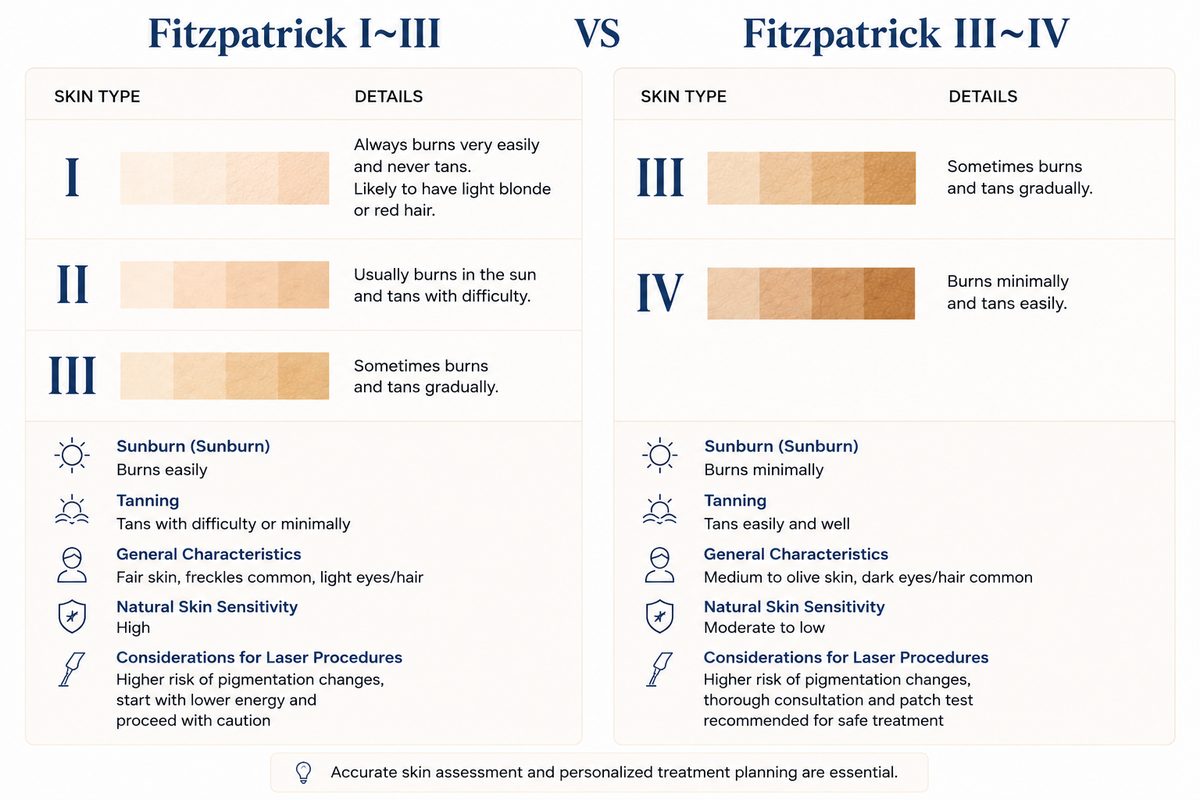
Dermatologists classify skin by the Fitzpatrick scale, which runs from type I, which is lightest and burns most easily, to type VI, which is deepest. Most Caucasian patients fall between types I and III. Most Korean patients fall between types III and IV.
The scale matters because melanin, the pigment in skin, absorbs laser energy. Deeper skin types carry a higher risk of post-treatment pigmentation, so doctors treat them with more conservative settings. Lighter skin types tolerate many pigment-targeting settings more comfortably, while showing redness more visibly and burning faster in the sun.
Neither direction is harder or easier in absolute terms. They are different starting points that call for different judgment.
What changes with lighter skin
Three things, in practice.
Parameter selection. Devices such as pico lasers, Ultherapy, Thermage FLX and Potenza are used on every skin type worldwide. For types I to III, the doctor can often use settings that would be too aggressive for deeper skin, while watching closely for post-treatment redness.
The reaction profile. In lighter skin, the common short-term reaction is erythema, meaning visible redness, rather than pigmentation. It typically settles within hours to days depending on the treatment. Your aftercare guidance is adjusted accordingly.
The concern profile. Lighter skin tends to show photoageing earlier: sun spots, freckling, broken capillaries and fine lines. Concerns such as facial redness and rosacea are also more common in Western patients, and respond well to the vascular and energy treatments available in Seoul.
If you are unsure which treatment fits your skin, that is exactly what a consultation is for. Message us on WhatsApp and our English-speaking coordination team will arrange a time that suits your schedule.
Common treatments for Western patients in Seoul
The treatments Western patients book most often at a Seoul dermatology clinic tend to cluster around a few goals.
- Sun damage and pigment spots. Pico laser sessions for freckles and sun spots are quick, and lighter skin types often need fewer sessions for discrete spots.
- Redness and rosacea. Vascular-targeted treatments address the flushing and visible capillaries that lighter skin shows more readily.
- Lifting and firmness. Ultrasound and radiofrequency lifting work identically across skin types, since they target layers beneath the pigment level.
- Texture and pores. Microneedling radiofrequency and skin boosters are skin-type neutral and widely used for all patients.
Costs for these categories are covered in our treatment cost guide.
Questions worth asking any clinic
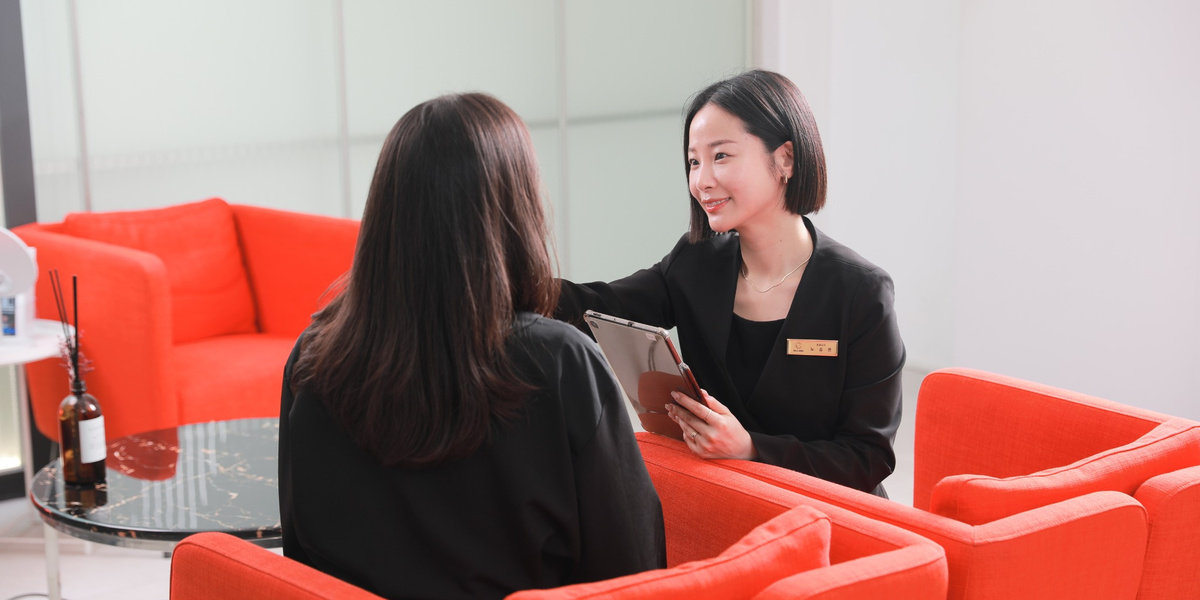
Wherever you book in Seoul, a few questions will tell you quickly whether a clinic takes skin typing seriously. Our guide to finding an English-speaking dermatologist in Seoul covers the wider search.
- Will a doctor examine my skin and confirm my skin type before treatment is chosen?
- Can the settings be adjusted for my skin type, and does the doctor explain how?
- Is a test spot available for pigment treatments if there is any doubt?
- What is the aftercare plan, and how do I reach the clinic afterwards if something comes up?
A clinic that answers these plainly is a clinic treating you as an individual case, not a template.
Frequently asked questions
Do Korean clinics use different machines for international patients?
No. The platforms are the same ones used in clinics worldwide. What changes is the assessment and the settings, which are chosen for your skin type and history rather than for an average patient profile.
Is laser treatment more painful on lighter skin?
Not inherently. Comfort depends on the treatment and the settings, and numbing cream is available where relevant. Lighter skin may look redder afterwards, which is a visibility difference rather than a severity difference.
Can redness-prone or rosacea skin be treated safely?
Yes, with the right treatment selection. Redness-prone skin calls for vascular-appropriate choices and conservative settings, which is why the examination comes before any device is chosen.
Will my results differ from what Korean patients see?
The biology of collagen and pigment clearance works the same way. What differs is the concern profile: Western patients more often treat sun damage, redness and fine lines, while pigment conditions such as melasma are more common in deeper skin types. The plan follows the concern.
Western patients at Dr. E-Laser Dermatology
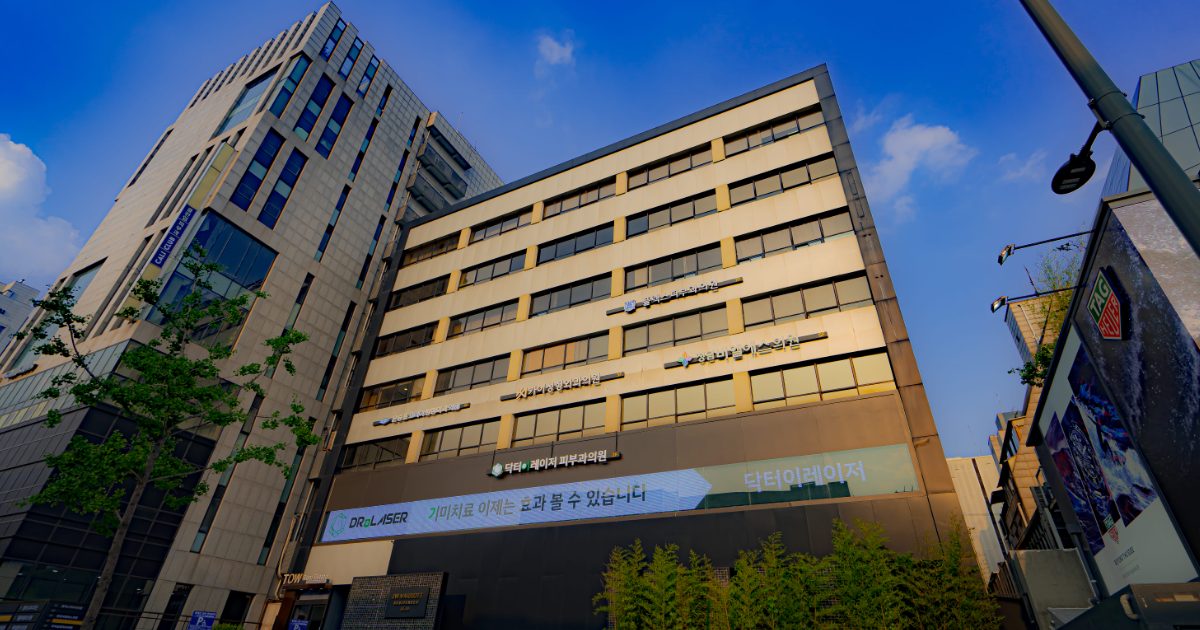
Dr. E-Laser Dermatology regularly cares for international patients across a full range of dermatology and aesthetic treatments. Every treatment plan begins with a doctor-led examination, and settings are chosen for your skin, not for an average. Where a pigment treatment carries any uncertainty, a conservative first pass or test spot is the default.
The clinic is located in Cheongdam, a short walk from Apgujeong Rodeo Station, and English-speaking coordination is available by phone and WhatsApp before, during and after your visit.
For how we support international patients at our clinic, see our international patients page.
It is normal to be cautious about laser treatment at a clinic you have not been to before. A consultation carries no obligation, and you are welcome to bring every question on this page. Message us on WhatsApp to get started.
About the Doctor
Dr. Kwangsuk Suh is a board-certified dermatologist and the medical director of Dr. E-Laser Dermatology. He is an adjunct clinical professor of dermatology at Kyung Hee University and Sungkyunkwan University colleges of medicine, and an active member of the Korean Association of Dermatologists, the Korean Association of Clinical Dermatologists, the Korean Society of Hair Restoration Surgery, and the Korean Society for Dermatologic and Cosmetic Surgery.
This article is for general information and is not medical advice. Outcomes vary between individuals, and a diagnosis and treatment plan are confirmed during an in-person consultation.
Medically reviewed by Dr. Kwangsuk Suh, board-certified dermatologist.