
Medically reviewed by Dr. Kwangsuk Suh, board-certified dermatologist.
Laser dermatology has a complicated reputation among people with deeper skin tones, and it was earned honestly. Early lasers were designed and tested mostly on lighter skin, and stories of burns, dark patches, and uneven tone still circulate. The reassuring truth is that laser treatment for dark skin can be done thoughtfully and well, but it asks more of the clinic: the right devices, more conservative settings, and a doctor who understands how melanin-rich skin behaves.
This guide explains why darker skin tones (Fitzpatrick IV to VI) respond differently to laser, where the real risks lie, and how a laser-specialist clinic in Seoul manages them. It is written for international patients, and our coordinators can help with appointment questions.
Why Skin Tone Changes the Laser Conversation
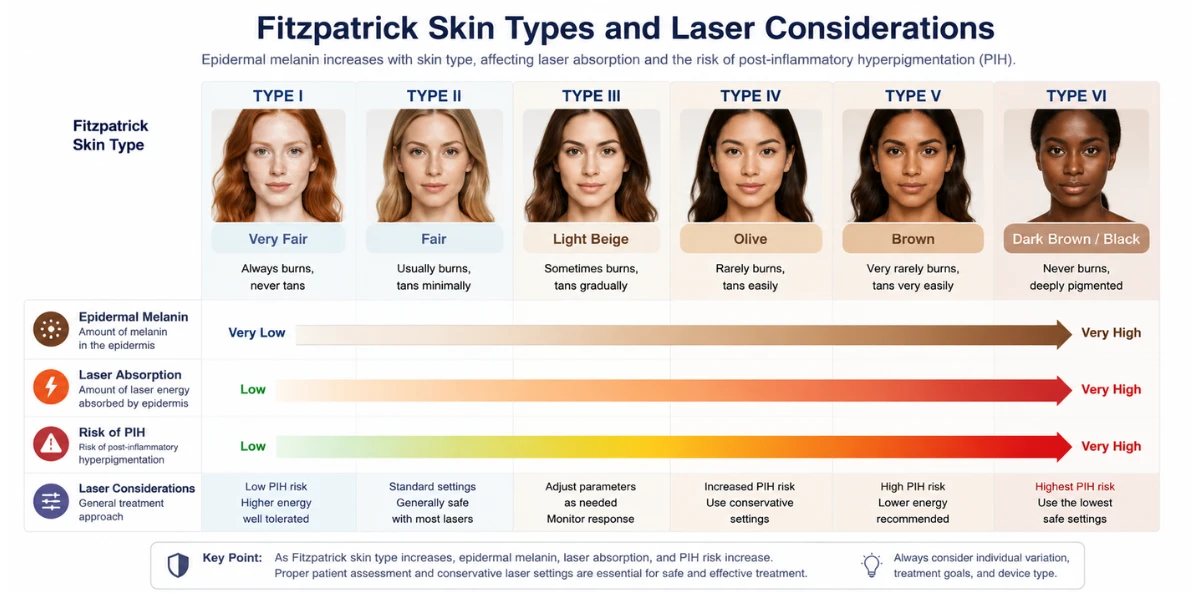
Dermatologists describe skin tone using the Fitzpatrick skin type scale, which runs from type I (very fair, burns easily) to type VI (deeply pigmented, rarely burns). Types IV to VI, common among patients of South Asian, Southeast Asian, Middle Eastern, African, and Latin American heritage, carry more melanin in the epidermis, the skin’s outer layer.
That melanin matters because most lasers work by being absorbed by a target: a pigment spot, a blood vessel, a tattoo particle. In deeper skin tones, the melanin in the surrounding epidermis competes for that energy. If the device and settings are not chosen with care, healthy skin absorbs heat it was never meant to receive, and it responds with inflammation.
None of this is a reason to avoid laser. It is a reason to choose a clinic that treats your Fitzpatrick skin type as a central part of the plan rather than a footnote.
The Main Risk: Post-Inflammatory Hyperpigmentation
The most common complication in darker skin is post-inflammatory hyperpigmentation (PIH): dark marks that appear where the skin was inflamed, sometimes lasting months. Melanin-rich skin defends itself by producing more pigment, so any excessive heat can leave a shadow behind. Less commonly, overly aggressive treatment can do the opposite and leave lighter patches.
PIH risk is the reason laser treatment for dark skin cannot simply reuse the parameters designed for lighter skin. The risk is manageable, but it has to be managed on purpose.
If existing dark marks or uneven tone are what brought you here, our guide to pigmentation treatment in Seoul covers how the pigment types differ and which treatments suit each.
How a Careful Clinic Lowers the Risk
At a laser-focused practice, safety for deeper tones comes from method rather than luck.
Assessment first. Your Fitzpatrick type, any history of PIH or keloid scarring, recent sun exposure, and any underlying pigment condition are established before a device is chosen.
Safe laser settings. For darker tones this usually means lower energies, gentler passes, and longer intervals between sessions. Progress is a little slower by design, because the priority is improvement without inflammation.
Test spots. For higher-risk treatments, a small, discreet area can be treated first and reviewed a week or two later before committing the whole face. It is a simple step that catches an unexpected reaction early.
Preparation and aftercare. Pigment-calming topical care before and after treatment, together with strict sun protection, meaningfully lowers the chance of PIH.
The Technologies That Are Generally Friendlier
Device choice is where laser treatment for dark skin has genuinely improved in the last decade. Three families stand out.
Picosecond lasers. A pico laser delivers energy in extremely short pulses, breaking pigment apart with a photoacoustic effect rather than sustained heat. Less heat means less inflammation, which is why pico laser treatment for dark skin has become a mainstay of tone work on deeper complexions. Our pico laser guide explains the approach in detail.
Longer wavelengths. The 1064 nm wavelength passes through the epidermis with relatively little absorption by surface melanin, reaching deeper targets while sparing the surrounding skin. It is a workhorse wavelength for darker tones.
Radiofrequency microneedling. RF energy is not absorbed by melanin at all. Delivered through fine needles beneath the surface, it remodels scars and texture with far less risk to the skin’s tone, which is why it features in our acne scar laser guide, acne scarring being a frequent concern in darker skin.
Melasma Deserves Extra Caution
Melasma in darker skin is where restraint matters most. Treated aggressively, melasma can darken rather than fade, so the approach is deliberately conservative: very low-energy laser toning over a course, combined with topical treatment and diligent sun protection. Our melasma treatment guide explains the programme, and the same principles apply, with extra care, to melasma in darker skin tones.
Honest Limits
A trustworthy clinic will also tell you what it will not do. Some treatments remain higher-risk on type V and VI skin and may be declined in favour of a gentler route. Conservative settings can mean more sessions before the change you want. And no clinic, anywhere, can reduce PIH risk to zero. A doctor who occasionally says no is protecting your skin, and that caution is worth more than an ambitious promise.
Wondering whether laser suits your skin tone? Share a photo and our English-speaking coordinators will help you plan a careful approach. Speak with us on WhatsApp.
Laser for Darker Skin Tones at Dr. E-Laser Dermatology
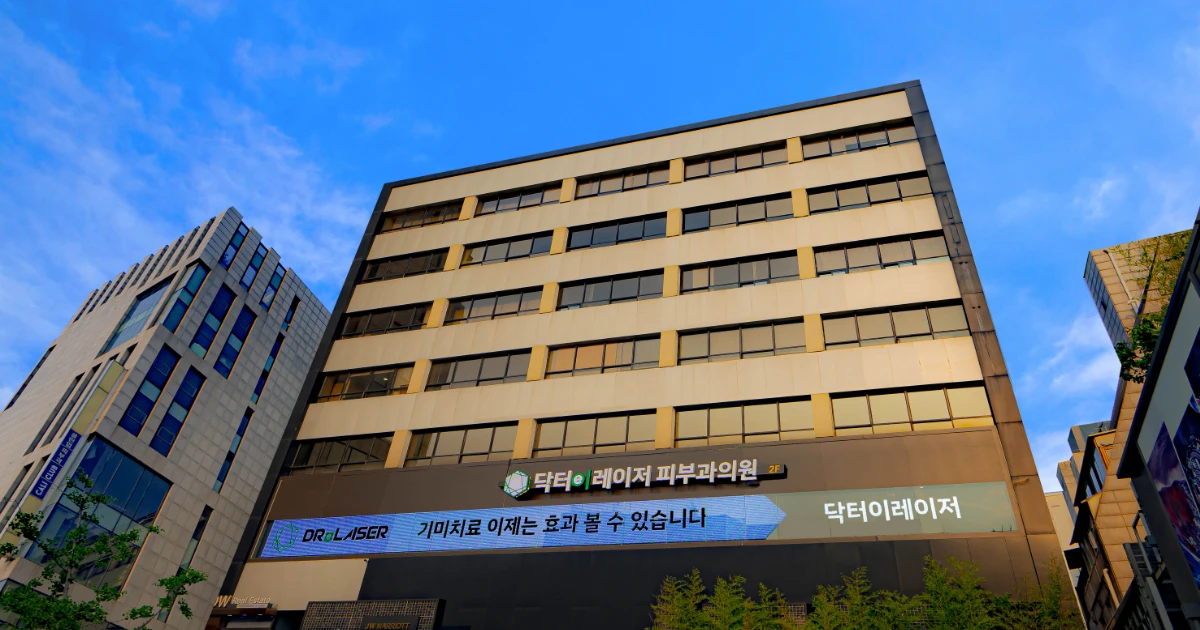
Dr. E-Laser Dermatology is a laser-focused dermatology practice at 830 Seolleung-ro, 2F, Gangnam-gu, Seoul, a one-minute walk from Apgujeong Rodeo Station Exit 4. Because the clinic carries a wide range of devices, including picosecond lasers, longer-wavelength platforms, and RF microneedling, laser treatment for dark skin is planned by suitability rather than by whichever machine is available, and every plan begins with the doctor’s assessment of your skin type and history.
For the pigmentation treatments we offer, see our pigmentation treatment page.
Our coordinators and staff support you in English, from the first message through the consultation with the doctor to aftercare. Our guide to finding an English-speaking dermatologist in Seoul explains the wider process. Enquiries can be made on WhatsApp.
Pricing and Consultation
Because the right plan depends on your skin type, your concern, and the number of sessions a conservative approach requires, pricing is shared during your consultation rather than as a single fixed figure.
Frequently Asked Questions
Is laser treatment safe for dark skin? It can be performed safely when the device, wavelength, and settings are matched to your Fitzpatrick skin type and history. The key risks, chiefly PIH, are managed with conservative parameters, test spots, and careful aftercare.
What is PIH, and how likely is it? Post-inflammatory hyperpigmentation is darkening where skin was inflamed. Deeper tones are more prone to it, which is why safe laser settings and gentle, staged treatment matter. A careful approach reduces the risk considerably, though never to zero.
Which lasers work for darker skin tones? Picosecond lasers, longer wavelengths such as 1064 nm, and radiofrequency microneedling (which does not target melanin at all) are the usual choices. The right one depends on your concern and your skin.
Can melasma be treated in darker skin? Yes, cautiously. Low-energy laser toning over a course, combined with topical care and sun protection, is the standard approach. Aggressive treatment is avoided because it can worsen melasma.
Is support available in English? Yes. Our English-speaking coordinators support you from the first message through the consultation to aftercare, and you are welcome to message us on WhatsApp before your visit.
About the Doctor
Dr. Kwangsuk Suh is a board-certified dermatologist and the medical director of Dr. E-Laser Dermatology. He is an adjunct clinical professor of dermatology at Kyung Hee University and Sungkyunkwan University colleges of medicine, and an active member of the Korean Association of Dermatologists, the Korean Association of Clinical Dermatologists, the Korean Society of Hair Restoration Surgery, and the Korean Society for Dermatologic and Cosmetic Surgery.
Arrange a Consultation
If you have been unsure whether laser is right for your skin tone, we are glad to talk it through honestly. Share a photo, ask anything, and our English-speaking coordinators will arrange a private consultation. Speak with us on WhatsApp.
This article is for general information and is not medical advice. Outcomes vary between individuals, and a diagnosis and treatment plan are confirmed during an in-person consultation. Medically reviewed by Dr. Kwangsuk Suh, board-certified dermatologist.