Medically reviewed by Dr. Kwangsuk Suh, board-certified dermatologist.
Skin treatment has quietly become part of many Seoul itineraries, tucked between restaurants, galleries, and shopping. The question we hear most often is a simple one: how many days do I need? The honest answer is that it depends on what your skin needs, but it depends in predictable ways.
This guide sets out a practical approach to planning skin treatments in Korea: which treatments need no recovery time, which need a few quiet days, how to order them sensibly, and what 4, 7, and 10 days in Seoul each make possible.
Start With Downtime, Not the Wish List
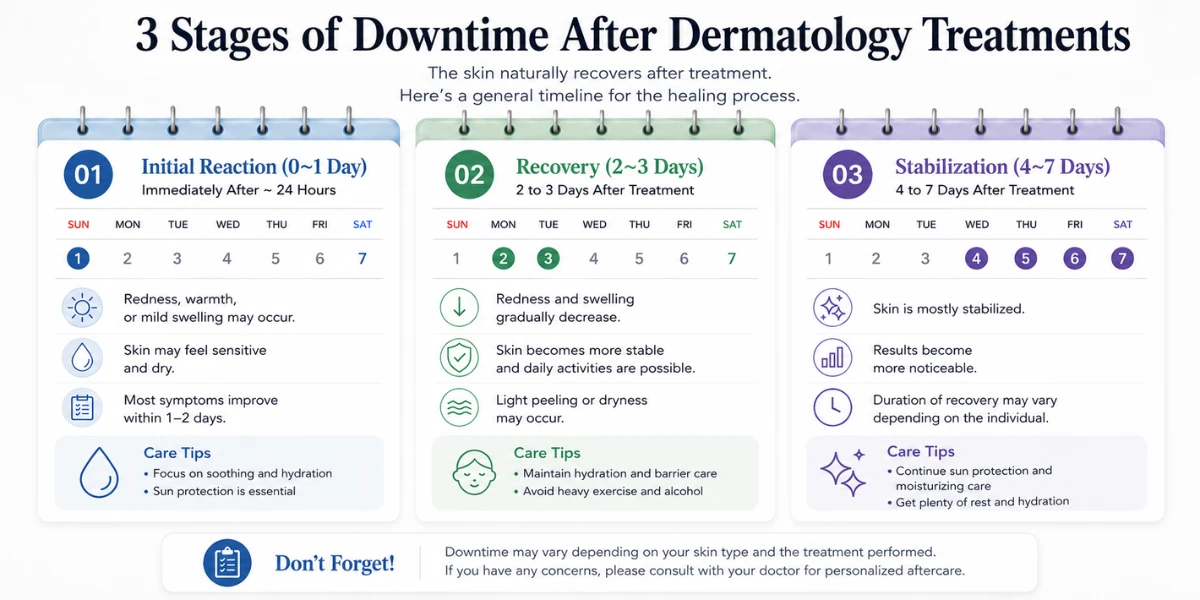
The most useful planning habit is to think in terms of downtime by treatment rather than treatment names. Broadly, treatments fall into three tiers.
Tier 1: no real downtime. Lunchtime treatments you could schedule before dinner. Laser toning and light brightening sessions such as pico toning, and ultrasound lifting such as Ultherapy, may leave mild, short-lived redness or tenderness, but nothing that shows the next day.
Tier 2: two to three days of redness or small marks. Treatments that leave visible but temporary traces. RF microneedling, spot pigment removal, and injected skin boosters such as Rejuran, which can leave small bumps or light bruising at the injection points for a day or two.
Tier 3: around a week of healing. Deeper resurfacing and more intensive laser work, where the skin needs several days of visible recovery and gentle care. These suit longer stays, or the very start of a trip.
Every tier is a generalisation; your own downtime depends on your skin and your plan, and the doctor’s guidance takes precedence over any list.
The Best Order of Treatments
When planning skin treatments in Korea, sequencing matters as much as selection. A sensible order for most trips looks like this:
- Consultation first, on day one or two. The plan should come from an in-person assessment, and an early appointment leaves the rest of the trip free for treatment. Our first-visit guide explains exactly what that appointment involves.
- Higher-downtime work early. Anything from tier 2 or 3 goes as early as possible, so redness and marks settle while you are still in Seoul and the clinic can see your skin again if needed.
- Boosters and lighter sessions later. Low-downtime treatments sit comfortably in the middle or later days, once the main work is healing.
- A quiet final day. Avoid new treatments in the last 24 to 48 hours. The final day is for a last check-in, not fresh needles or lasers.
The best order of treatments for you is ultimately set by the doctor, because some combinations need spacing between sessions and some work better in a particular sequence for your skin.
Sample Treatment Itineraries
These are illustrations rather than prescriptions; your own treatment itinerary comes out of the consultation. If you have fewer than four days, see our 3-day Seoul skin treatment itinerary.
A 4-day trip
Day 1: consultation and skin analysis, with same-day treatment if the doctor recommends something from tier 1. Day 2: any tier 2 treatment, done early. Days 3 to 4: recovery, gentle skincare, and a check-in before you fly. Four days suit one or two low-downtime treatments done well, not a full programme.
A 7-day trip
Day 1: consultation. Days 2 to 3: the main treatment, including tier 2 options, with time for bumps or redness to settle. Days 5 to 6: a second, lighter session where the plan calls for it, such as toning or a booster. Day 7: quiet. A week is the comfortable minimum for combining two treatments with visible recovery time.
A 10-day trip
Ten days open the door to tier 3 work: deeper treatment early in the trip, a review around the middle, and lighter finishing sessions near the end. They also allow genuine spacing between sessions, which some combinations require.
Planning a Seoul trip and unsure what fits your dates? Send your travel dates and a photo, and our English-speaking coordinators will map out what is realistic. Speak with us on WhatsApp.
Flying After Laser, Sun, and Other Travel Realities
Flying after laser. For light treatments, flying is generally fine within a day or two. Cabin air is dry, so the practical advice is moisturiser, water, and sunscreen rather than worry. After deeper treatments, the doctor may ask you to wait several days, which is another reason to schedule intensive work early. Always follow the specific guidance given for your treatment rather than a general rule.
Sun exposure. Treated skin is sun-sensitive, and holidays involve a great deal of walking. A broad-spectrum sunscreen, reapplied through the day, is essential after almost any treatment, and a hat is a sensible companion for palace courtyards and rooftop cafés.
Heat. Saunas, jjimjilbangs, hot yoga, and long hot baths are usually off the menu for a few days after treatment. If a Korean bathhouse is on your list, schedule it before your treatment, not after.
Aftercare While Travelling
Aftercare while travelling is mostly about gentleness: a mild cleanser, moisturiser, sunscreen, and resisting the urge to touch anything that is healing. Pack your own basics rather than relying on hotel amenities, keep alcohol modest around treatment days, and keep the clinic’s contact details to hand. A clinic used to international patients will answer aftercare questions by message, both during your trip and after you fly home.
Planning Your Trip With Dr. E-Laser Dermatology
Dr. E-Laser Dermatology is a doctor-led laser dermatology practice in Cheongdam, Seoul, a 1-minute walk from Apgujeong Rodeo Station Exit 4. Because planning skin treatments in Korea is half logistics and half medicine, we help with both: our English-speaking coordinators help you shape a realistic treatment itinerary around your dates, and the doctor confirms the plan in person at the consultation.
If budget is part of the planning, our guide to skin treatment costs in Seoul explains how pricing typically works.
Pricing and Consultation
Because a plan depends on your skin and your dates, pricing is shared during your consultation rather than as a single fixed figure. Sharing your travel window early helps the clinic suggest a sequence that genuinely fits it.
Frequently Asked Questions
Hours, location, booking and aftercare are answered in one place on our clinic FAQ page.
How many days do I need for skin treatments in Seoul? When planning skin treatments in Korea, allow 3 to 4 days for one or two low-downtime treatments, about a week to combine treatments with a few days of visible recovery, and 10 days or more for deeper resurfacing work. The consultation confirms what your skin actually needs.
Can I fly the day after a laser treatment? After light treatments, usually yes, with moisturiser and sunscreen for the dry cabin air. After deeper treatments the doctor may advise waiting several days, so intensive work belongs early in the trip.
Is it better to do everything in one trip or spread treatments out? Some treatments combine well within a single trip; others need weeks between sessions. The doctor will tell you which parts of your plan fit your dates and which are better continued on a later visit or managed from home.
When should I book the consultation? Before you travel, for day one or two of your trip. Booking by message is straightforward, and an early consultation leaves the rest of your stay free for treatment and recovery.
What happens if my skin reacts after I get home? You can message the clinic with photos, and our English-speaking coordinators will pass everything to the doctor and reply with guidance. Aftercare does not end when you board the plane.
About the Doctor
Dr. Kwangsuk Suh is a board-certified dermatologist and the medical director of Dr. E-Laser Dermatology. He is an adjunct clinical professor of dermatology at Kyung Hee University and Sungkyunkwan University colleges of medicine, and an active member of the Korean Association of Dermatologists, the Korean Association of Clinical Dermatologists, the Korean Society of Hair Restoration Surgery, and the Korean Society for Dermatologic and Cosmetic Surgery.
Arrange a Consultation
If you are fitting skin treatment into a Seoul trip and want a sequence that actually works with your dates, we are glad to help. Share your dates and a photo, and our English-speaking coordinators will arrange a private consultation. Speak with us on WhatsApp.
This article is for general information and is not medical advice. Outcomes vary between individuals, and a diagnosis and treatment plan are confirmed during an in-person consultation. Medically reviewed by Dr. Kwangsuk Suh, board-certified dermatologist.