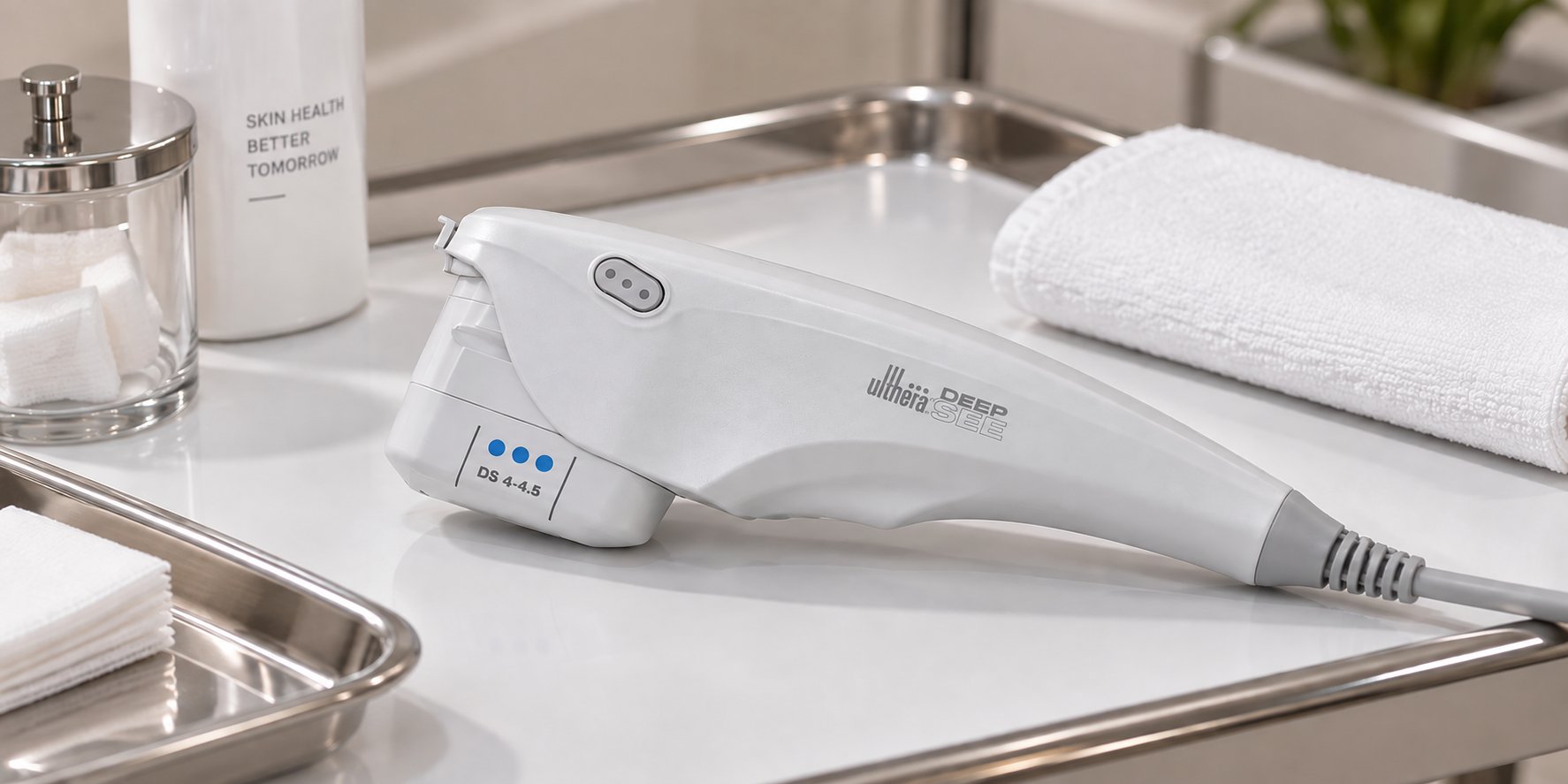
Yes, Ultherapy hurts. How much it hurts depends on tolerance as much as on the device. The useful questions are how much, where, why, and what your clinic does about it. This guide answers those from the physician’s side of the handpiece.
What the sensation actually is
Ultherapy delivers focused ultrasound to a precise depth under the skin, 1.5, 3.0 or 4.5 mm, and heats a tiny point to a temperature that makes collagen contract and later rebuild. Each shot is a brief, deep, hot prick. On thin areas over bone, the jawline, the temples, the brow, it feels sharper. On fleshy cheeks it feels duller and heavier.
Two things drive intensity: the depth of the transducer (4.5 mm is felt more than 1.5 mm) and the energy setting. A full face and neck session is several hundred shots, so fatigue matters as much as any single pulse.
Why it varies so much between people
Reported pain levels for Ultherapy vary widely from person to person, and the spread is not noise. Skin thickness, the amount of fat over bone, hormonal timing, caffeine, anxiety, and whether you have had the treatment before all move the number. Two residents with the same settings can describe the same session as mildly annoying or as the worst forty minutes of their year, and both are telling the truth.
What clinics do to manage it
The standard tools, in the order most Seoul dermatology clinics use them:
- Topical numbing cream, applied 30 to 60 minutes before, which blunts the surface sting but does not reach the deep heat.
- Energy and depth adjustment, which has the largest effect on how a session feels. A physician who is watching your face can lower energy on a sharp area and raise it where you tolerate more, without losing the lifting effect.
- Pacing and cooling, short breaks, cold air, and treating the harder areas early while you are fresh.
- Oral pain relief taken beforehand, which some clinics offer and some do not.
- Sedation, usually nitrous oxide or intravenous sedation, offered by some clinics for patients who want to be less aware. It adds monitoring requirements and recovery time and is a medical decision, not an upgrade.
At Dr. E-Laser Dermatology, comfort planning is part of the consult rather than an add-on. Depth and energy are adjusted per area during the session, which is the part patients notice most.
How the other lifting devices compare
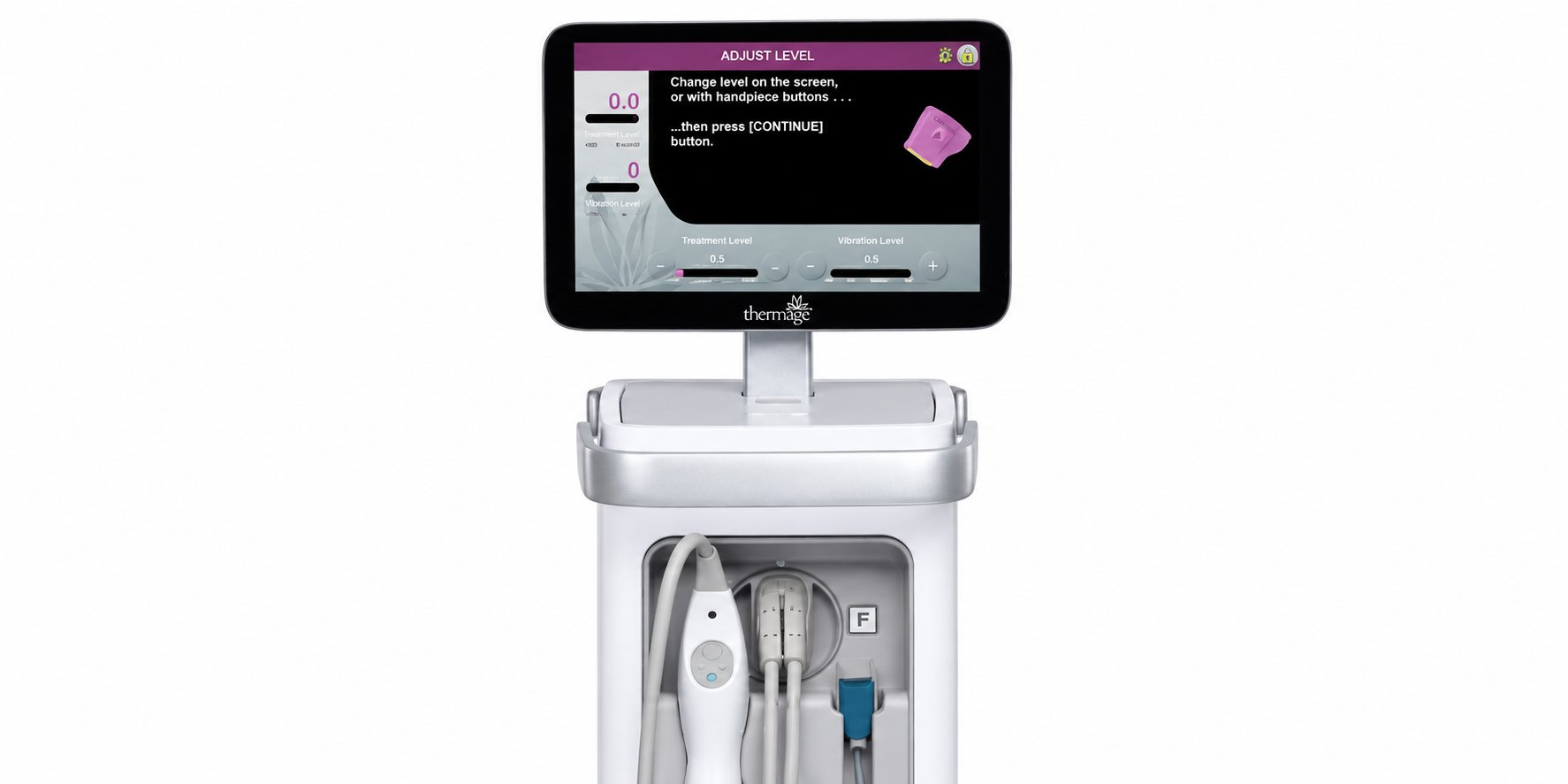
- Thermage FLX uses radiofrequency rather than ultrasound. The sensation is a broad, deep warmth in pulses, with vibration and integrated cooling designed to reduce surface heat. Many people find it easier than Ultherapy, though a full session is long. Our Thermage FLX page describes the cooling and tip verification system.
- Shurink Universe is also focused ultrasound, so the sensation is similar in kind to Ultherapy, with differences in shot pattern and pacing. See the Shurink guide.
- ONDA uses microwaves (Coolwaves) with surface cooling and is generally described as warm rather than sharp. See the ONDA guide.
- XERF is a radiofrequency treatment with a distinct heat profile. See the XERF guide.
None of these is painless. The right choice depends on your skin, your goal and your tolerance, which is why the Ultherapy vs Thermage decision is made in a consult, not from a chart.
After the session
Expect tenderness for a few days, especially when you press on the jawline, and sometimes mild swelling. Occasional numbness or a tender line along a nerve path can occur and usually resolves over weeks. If you are flying soon after, read flying after laser and energy treatments.
Who should think twice
Ultherapy is not suited to everyone: open lesions or active infection in the area, certain implants, pregnancy, and some medical conditions rule it out. If pain tolerance is your main concern, tell the physician plainly. A lower-energy first session, a different device, or splitting the face over two visits are all legitimate plans.
Related reading
- Ultherapy Prime in Seoul: the full guide
- Non-surgical skin tightening in Korea
- Thermage FLX in Seoul
If you are already in Seoul and want to talk through comfort options before booking a lifting treatment, message us on WhatsApp with your main concern. We will tell you honestly what to expect.