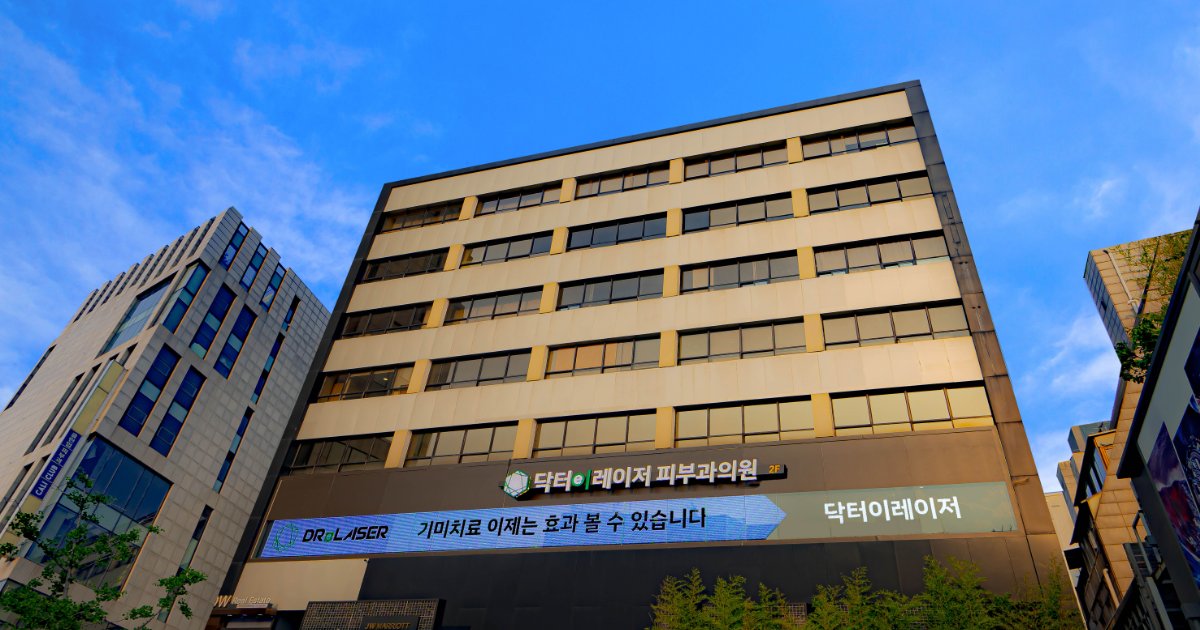
You searched for a skin clinic in Korea and found dozens of glossy sites. Most of them look the same. The question English-speaking residents ask on Reddit is not “which one is best” but “how do I know a real dermatologist will see me, and not a sales desk.”
The short answer is that Korea has two very different kinds of businesses using the words “skin clinic,” and the difference is visible if you know what to look for.
What “skin clinic” can mean in Korea
In Korean, the word that matters is 피부과 (pibugwa). In Korea a clinic can only carry 피부과 in its registered name when a board-certified dermatologist meets the requirements for opening it. A physician without that board can still legally treat skin, but must register as a general 의원 and display 진료과목: 피부과 separately.
Many other businesses treat skin. Aesthetic clinics run by physicians from other specialties, medical spas, and non-medical skin care shops all describe themselves in English as “skin clinics.” Some are very good at what they do. But they are not the same thing, and the English word hides the difference.
If you can read one Korean word before you book, make it this one.
Three things to check before you book
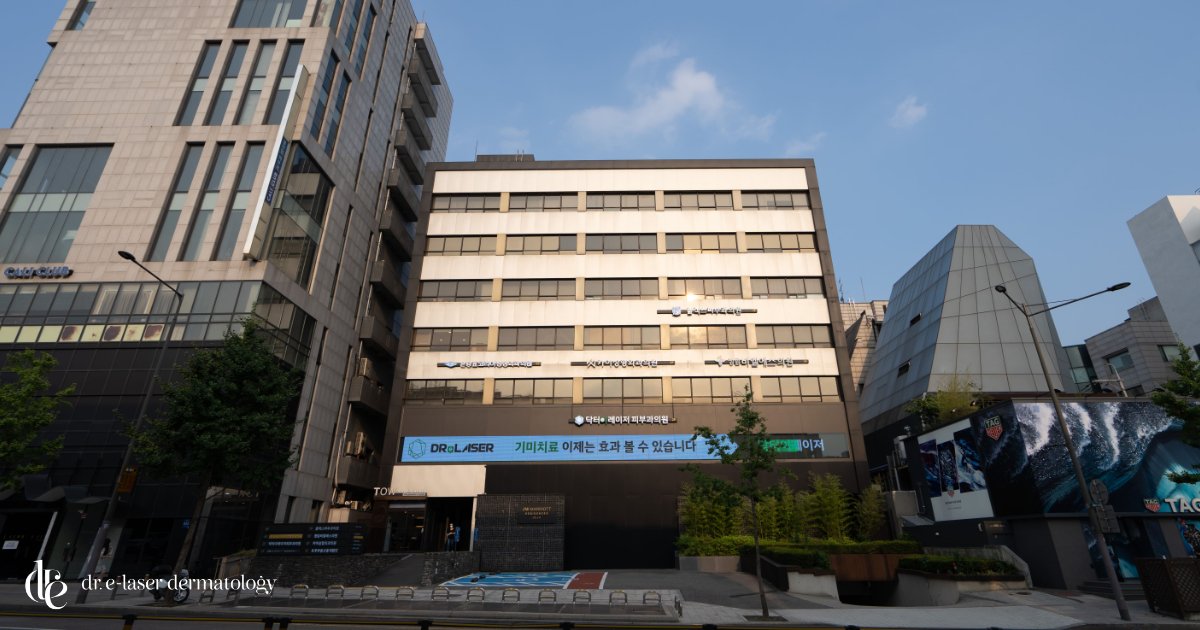
1. The Korean name on the door and the website
Look for 피부과 in the clinic’s Korean name. If the Korean name ends in 의원 without 피부과, or carries 피부과 only in a smaller 진료과목 line, the treating physician may not be a board-certified dermatologist. This is not a judgment about quality. It is simply what the sign is allowed to say.
2. Who assesses you, and who treats you
Ask two separate questions: who examines your skin and decides the plan, and who operates the device. In a dermatologist-led clinic the physician does the assessment and either performs the treatment or directly supervises it. At Dr. E-Laser Dermatology each patient is assessed by a physician before any treatment is decided, and the doctors’ credentials are listed individually on the medical team page using the field in which each qualification was earned.
3. Whether the consult is a diagnosis or a menu
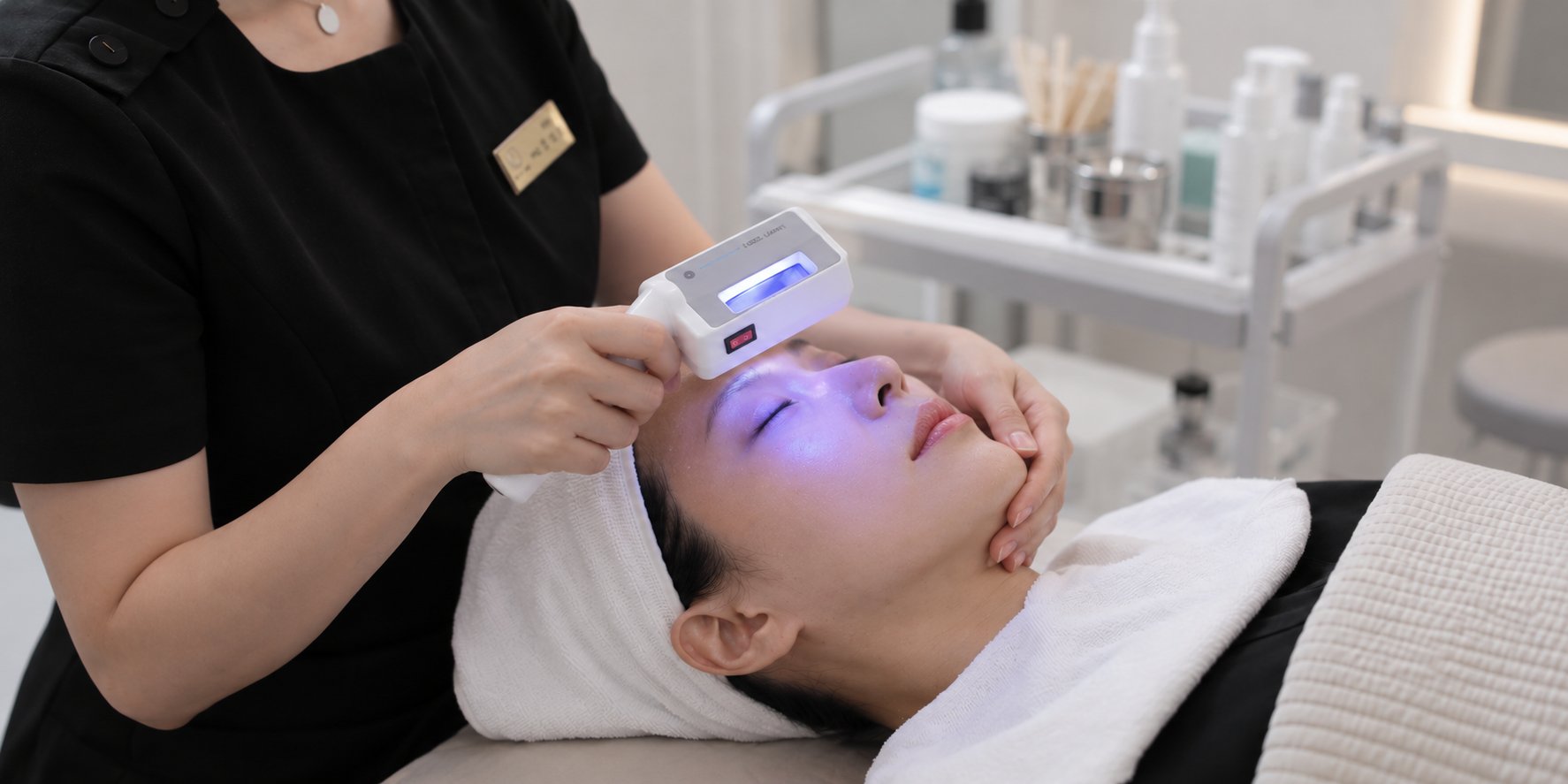
A diagnosis-first consult starts with your skin and your concern, then narrows to one or two options that fit. A menu-first consult starts with a list of treatments and works backward. Both exist, and only one of them starts from a diagnosis.
Practical signs of a diagnosis-first visit: the doctor looks at your skin under light or a scope before naming a device, you are told what is not suitable for you as clearly as what is, and combining several treatments in one day is discussed as a medical decision rather than a package.
Questions worth asking in English
- Is the treating doctor a board-certified dermatologist (피부과 전문의)?
- Will the doctor perform the treatment, or supervise it?
- For energy devices, are the tips and cartridges authenticated? Thermage FLX, for example, has built-in authentic tip verification and an energy log, which Dr. E-Laser lists on its Thermage page.
- What would you tell me not to do today?
A clinic that answers these quickly and plainly is usually the clinic you want.
Why the distinction matters more for certain treatments
For a hydrating facial, the difference between a skin shop and a dermatology clinic is small. For melasma, acne scarring, laser on darker or Caucasian skin, and high-energy lifting devices, it is large. Wrong laser settings can darken melasma. The wrong depth on an ultrasound lifting device can bruise or leave a line. These are physician decisions.
If your concern is pigmentation, read our guide to pigmentation treatment in Seoul. If you are comparing lifting devices, start with Ultherapy vs Thermage in Korea.
How Dr. E-Laser works
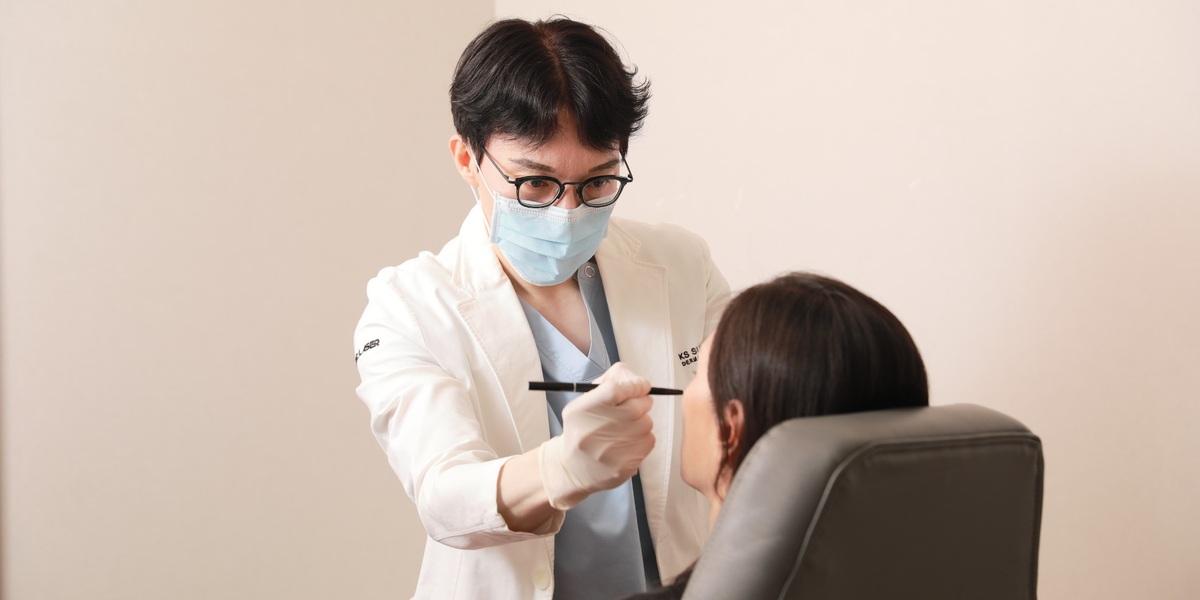
Dr. E-Laser Dermatology is a 피부과의원 in Cheongdam, Seoul. The physicians assess each patient before a plan is set, and the clinic describes its approach as accurate diagnosis first, then careful treatment. English-speaking residents are seen with English consultation support; details are on the International patients page.
The clinic does not publish before-and-after photographs on public pages, and it does not rank itself against other clinics. What it can tell you is who will see you, what they are qualified in, and what they would not recommend.
Related reading
- How to choose a dermatology clinic in Seoul
- Finding an English-speaking dermatologist in Seoul
- Your first visit to a Korean dermatology clinic
- Apgujeong dermatology clinic guide
If you are already in Seoul and want a physician to look at your skin before anything is suggested, message us on WhatsApp and tell us your concern in one line. We will tell you whether a consult makes sense.